
Verifying a shielded Cat6 manufacturer is a different exercise from verifying a UTP one. Foil, braid and drain wire add failure points that a simple continuity test on a pair will never reveal, and a supplier who passes a bench test can still ship reels with crushed foil or an unconnected drain. The verification method below is built for buying decisions: which evidence to request, in what order, what each document actually proves, and where the usual gaps appear between a factory’s sample and the container that arrives six weeks later.
Quick answer:
Verify an STP Cat6 manufacturer in three steps: a factory audit that confirms foil and braid tooling on site, a Fluke DSX-8000 channel test run with shielded adapters on a reel from your production lot, and a pre-shipment inspection with random shield continuity checks. Caveat: certificates alone prove nothing about your lot, so tie every report to a reel label and lot number before you release payment.
How Do You Verify an STP Cat6 Manufacturer?
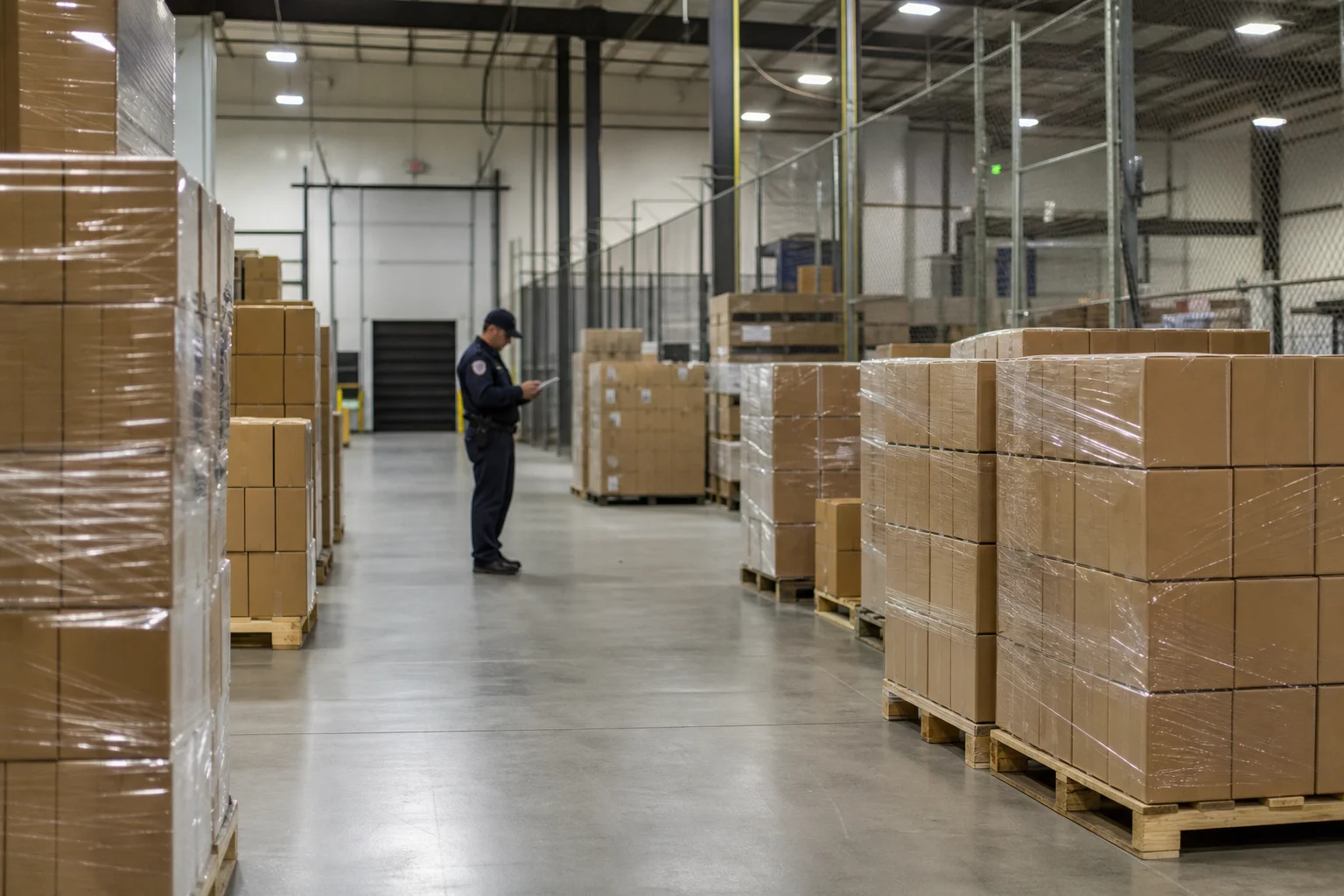
Most sourcing failures on shielded cable are not caused by a factory that cannot make it. They are caused by a buyer who verified the company instead of the lot. A trading company with a polished catalogue, a valid quality certificate and a good sample reel can still deliver a container whose foil width is 2 mm narrow, whose drain wire is aluminium-coated rather than tinned copper, and whose test report belongs to another customer’s production run. The method below is designed to close that gap, using evidence that a factory cannot easily borrow.
Why STP Verification Is Harder Than UTP Verification
On UTP, a channel test and a conductor diameter check catch most problems. On STP, three additional variables decide whether the cable works in the application it was bought for: foil coverage around each pair or around the core, braid density where a braid is specified, and the electrical and mechanical integrity of the drain wire path from reel to jack. None of these are visible on a datasheet, and all three can degrade without changing the cable’s outward appearance.
There is also an application trap. Shielded cable is bought for high-EMI environments such as plants with variable frequency drives, imaging rooms, broadcast facilities and machine halls next to power trunks. In those places a marginal shield shows up as intermittent errors rather than a clean failure, which means the problem surfaces months after acceptance. Verification has to be strict enough to catch marginal, not just broken.
The Evidence Stack Compared
Each item below is useful, but none is sufficient alone. The right approach is to combine them so that a claim made in one document is checked by another source.
| Evidence | What it actually proves | Typical turnaround | Cost band (USD) | Where it fails |
|---|---|---|---|---|
| Quality management certificate | That a system exists at company level | 1-3 days | No cost to buyer | Says nothing about your lot or shield tooling |
| Third-party factory audit | That equipment, lines and process control exist on site | 1-2 weeks | 300-1,200 per audit day | Can miss foil width and braid density unless scoped |
| Fluke DSX report with shielded adapters | That a specific channel passes Cat6 limits | 2-5 days | 150-600 per test set | Useless without lot number and adapter type stated |
| Retained sample reel | That production matches the approved construction | With order | Cost of 100-305 m | Only works if sealed, labelled and stored by both sides |
| Pre-shipment inspection | That the packed goods match the order | 3-5 days before shipment | 250-800 per shipment | Sampling only; needs a written checklist |
| Reference project contact | That the cable performed in a similar environment | 1-2 weeks | No cost | References are chosen by the seller |
Read the table as a sequence rather than a menu. The audit answers whether the plant can make the product; the Fluke report answers whether the current production does; the retained sample and inspection answer whether the shipment matches. Skipping the middle step is the most common and most expensive shortcut.
Start With the Factory, Not the Certificate
A quality certificate tells you a management system was audited at some point. It does not tell you whether the plant owns a foil wrapping line, a braiding machine, or whether it buys pre-shielded cores from a third party and only extrudes the jacket. That distinction matters, because a jacket-only operation has no control over foil overlap or braid coverage, and will not be able to correct a shield defect when you report one.
Ask three specific questions before any audit. Which processes happen inside your plant: conductor drawing, insulation, pair twisting, shielding, jacketing? How many shielding lines run per shift? And can you show the incoming inspection record for foil and braid wire? A manufacturer answers these in detail within a day. A trader forwards them to someone else or replies with a brochure.
Testing the Shield: What a Real Report Shows
A credible report names the instrument, the adapter type, the test limit and the reel or lot it came from. If the report was produced with unshielded adapters on a shielded channel, the shield path was never energised and the result proves nothing about the product you are buying. Ask for the adapter model in the header and the lot number in the body, and compare the lot number with the reel label photograph taken on the same day.
Beyond the channel test, ask for two physical measurements that are cheap to produce and hard to fake: foil overlap percentage from a cross-section photograph, and braid coverage percentage where S/FTP is specified. A factory that can supply both is measuring its own process. A factory that cannot is relying on you not to ask. Pair those with a conductor diameter check, since 23 AWG is the Cat6 norm and a 24 AWG substitution is the classic way to hold a price during a copper spike.
Three Buyer Scenarios
- Distributor placing a first 10 km order. Budget for one audit day and one Fluke test set, and retain a sealed 305 m sample from the production lot. If the budget only covers one item, choose the Fluke test with shielded adapters, because it validates the actual production rather than the plant.
- Contractor buying for a single industrial project. Verification can be lighter on the plant and heavier on the shipment: a pre-shipment inspection with random shield continuity checks on two reels per pallet, plus a retained sample, is usually enough for one project’s quantity.
- OEM buyer with printed jackets and own packaging. Verification must cover print plates and packaging as well as cable, because a misprinted reel cannot be sold under your brand and returns are expensive. Add a packaging proof approval step before mass production.
A Verification Checklist You Can Run in Two Weeks
- Collect the construction datasheet, shield drawing and declarations, and confirm the shield type in the document title matches the purchase order.
- Ask for the process list and the shielding line count, then request a short live video call showing the foil line and braider running.
- Order a 100-305 m sample reel from current production, not from a showroom stock shelf, and record the lot number.
- Test the sample with a Fluke DSX-8000 or DSX-5000 using shielded channel adapters, and keep the native test file, not a screenshot.
- Cut a short length and check shield continuity and drain-wire contact at both ends with a multimeter, then inspect foil overlap on a cross-section.
- Commission a third-party audit scoped to conductor diameter, foil width, braid density and jacket wall thickness if the order exceeds 10 km.
- Approve a sealed retained sample, signed by both sides, and reference it in the purchase order as the standard for the shipment.
- Book pre-shipment inspection with a written checklist covering reel count, length tolerance, jacket print, lot labels and random shield continuity.
Documentation Red Flags
Several patterns should stop an order. A test report with no lot number, or one whose date precedes your production start, is borrowed evidence. A datasheet that lists electrical values without a frequency sweep, or stops at 100 MHz, is not a Cat6 document. A jacket print that changes between the sample and the shipment, or that omits the construction, breaks traceability. And a supplier who resists a third-party inspection while offering a discount instead is telling you what the inspection would find.
Verification costs money, and it is easy to treat it as overhead on a commodity purchase. The comparison that matters is against the cost of a failed commissioning: re-pulling a floor of shielded cable, replacing jacks that were installed on a cable with a broken drain path, and explaining the delay. For most buyers a two-week verification routine costs less than one avoided rework event. If you are comparing plants across origins, our guide to STP Cat6 industrial suppliers sets out how verification expectations differ by market, and the OEM-specific steps are covered in STP Cat6 OEM in China. The same method applied to a higher-grade cable is described in Cat7 manufacturer verification.
FAQ
1. What is the fastest way to verify an STP Cat6 manufacturer?
Request a sample reel from current production and test it with a Fluke DSX-8000 using shielded channel adapters, with the lot number recorded. That single step validates actual output rather than marketing claims. Follow with a scoped audit if the order exceeds 10 km, and add pre-shipment inspection for the first container.
2. Does a quality certificate prove a factory makes shielded cable?
No. It confirms a management system exists, not that foil wrapping or braiding happens on site. Some suppliers buy pre-shielded cores and only extrude the jacket, which leaves them unable to control foil overlap or braid coverage. Ask which processes run in-house and request a live view of the shielding line.
3. Why do shielded adapters matter in a Fluke test?
Shielded adapters energise and measure the shield path. A channel tested with unshielded adapters can pass every pair parameter while the drain wire is disconnected or the foil is damaged. For STP purchases, insist that the report header names the adapter type and that the lot number appears in the same document.
4. How much does it cost to verify a cable factory?
Indicative costs are USD 300-1,200 per audit day, USD 150-600 for a Fluke test set with shielded adapters, and USD 250-800 for a pre-shipment inspection. Retaining a sealed sample reel costs the price of 100-305 m. Total verification for a first container usually stays well below the cost of re-terminating a failed floor.
5. What should a pre-shipment inspection cover for STP Cat6?
Reel count and format, length tolerance, jacket print against the approved sample, lot labels matched to the test report, carton condition, and random shield continuity checks on at least two reels per pallet. Ask the inspector to photograph labels and the test point readings so the evidence survives after the container is closed.