Equipped with basic knowledge of the various cable types and their features, how then do we choose? Why select one type of cable over the other? It actually boils down to your purpose. In other words, the cable you choose depends upon the end result you want to achieve, particularly your viewing preference.
While eight HDMI cable types exist, all these were fundamentally derived from only two certification standards – Standard and High-Speed.
If you’re content with High-Definition (HD) viewing experience (720p to 1080p resolution), the Standard HDMI cable is best for you. Cable and satellite televisions, projectors, digital broadcast HD, DVD players, and other common displays work perfectly fine using this cord. Now if having the same features and performance as the Standard HDMI cable is what you want, all the while making wired internet connection (Ethernet) possible, then perhaps the Standard HDMI Cable with Ethernet is for you. Otherwise, if resistant, internal cabling for audio/video vehicles is what you’re looking for, the Standard HDMI Automotive cable becomes the right choice.
To assist us in exploring cable options, a basic guide is provided below. It will give us an overview of the cable types, their capabilities and how to differentiate them from each other. Furthermore, all HDMI cable products are required to be labeled with Cable Name Logos provided by HDMI Licensing Administrator Inc. To pick out the right cable, it’s highly recommended that consumers look for these logos whenever purchasing.
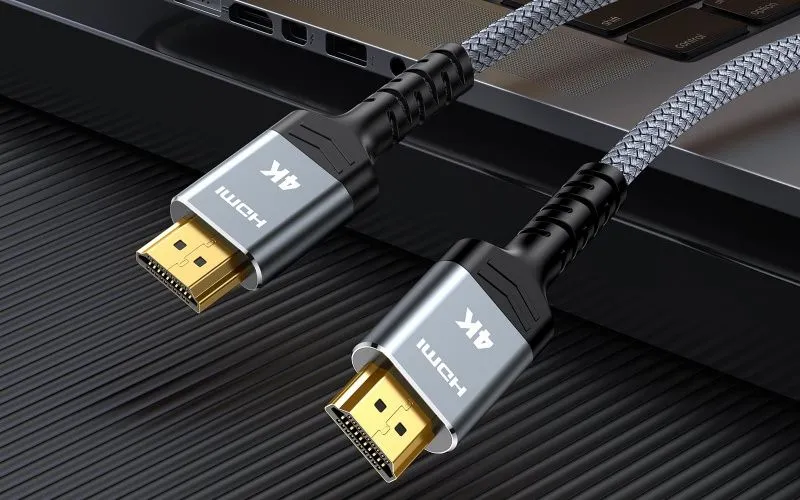
Generally, High-Speed HDMI cables offer greater data transfer speeds and support higher resolution than that of the Standard HDMI. So if a viewing experience with far better image clarity, color, and overall quality is desired, opt for these cables. They support resolutions of 1080p to 4K with add-on display features including 3D viewing and richer color palettes. If Ethernet is required or if it’s for automobiles, then choose high-speed cables designed for Ethernet and for automobiles, respectively. It’s that simple.
There are Premium High-Speed HDMI Cables with and without Ethernet features as well. These premium certifications signify that the cables have undergone more rigorous performance and capabilities tests. Needless to say, these cables are guaranteed to give a more reliable 4K performance, higher bandwidths and wider color palettes than their non-certified cable counterparts. The certified versions are nonetheless optional.
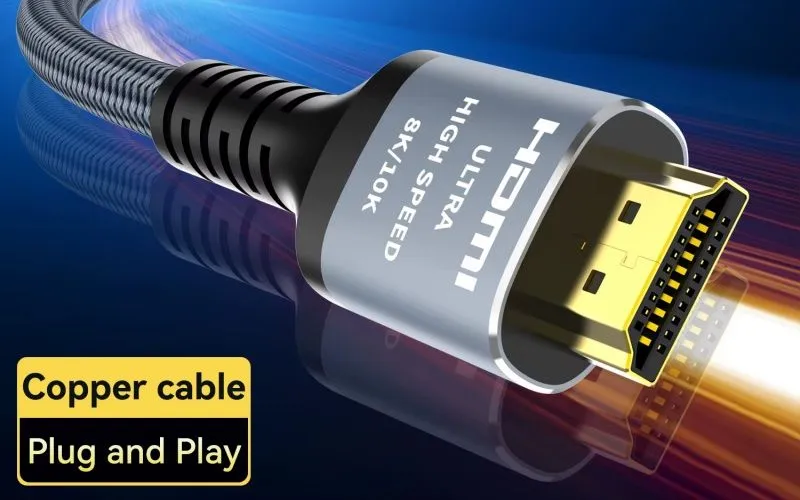
For even higher resolutions (5K, 8K and 10K) with Ethernet features, the Ultra High-Speed HDMI Cable is the best option. These cables will provide you the ultimate cinematic experience you need.
While eight HDMI cable types exist, all these were fundamentally derived from only two certification standards – Standard and High-Speed.
If you’re content with High-Definition (HD) viewing experience (720p to 1080p resolution), the Standard HDMI cable is best for you. Cable and satellite televisions, projectors, digital broadcast HD, DVD players, and other common displays work perfectly fine using this cord. Now if having the same features and performance as the Standard HDMI cable is what you want, all the while making wired internet connection (Ethernet) possible, then perhaps the Standard HDMI Cable with Ethernet is for you. Otherwise, if resistant, internal cabling for audio/video vehicles is what you’re looking for, the Standard HDMI Automotive cable becomes the right choice.
To assist us in exploring cable options, a basic guide is provided below. It will give us an overview of the cable types, their capabilities and how to differentiate them from each other. Furthermore, all HDMI cable products are required to be labeled with Cable Name Logos provided by HDMI Licensing Administrator Inc. To pick out the right cable, it’s highly recommended that consumers look for these logos whenever purchasing.