
Unshielded Patch Panel: The Default Choice
Quick answer / TL;DR: Short answer: use an unshielded panel where the cable is U/UTP and the environment is ordinary – offices, schools, homes. Match the panel's category to the cable (Cat5e, Cat6, Cat6a), and do not mix: a Cat5e panel caps a Cat6 cable. Label every port at both ends and keep a port map in the cabinet.
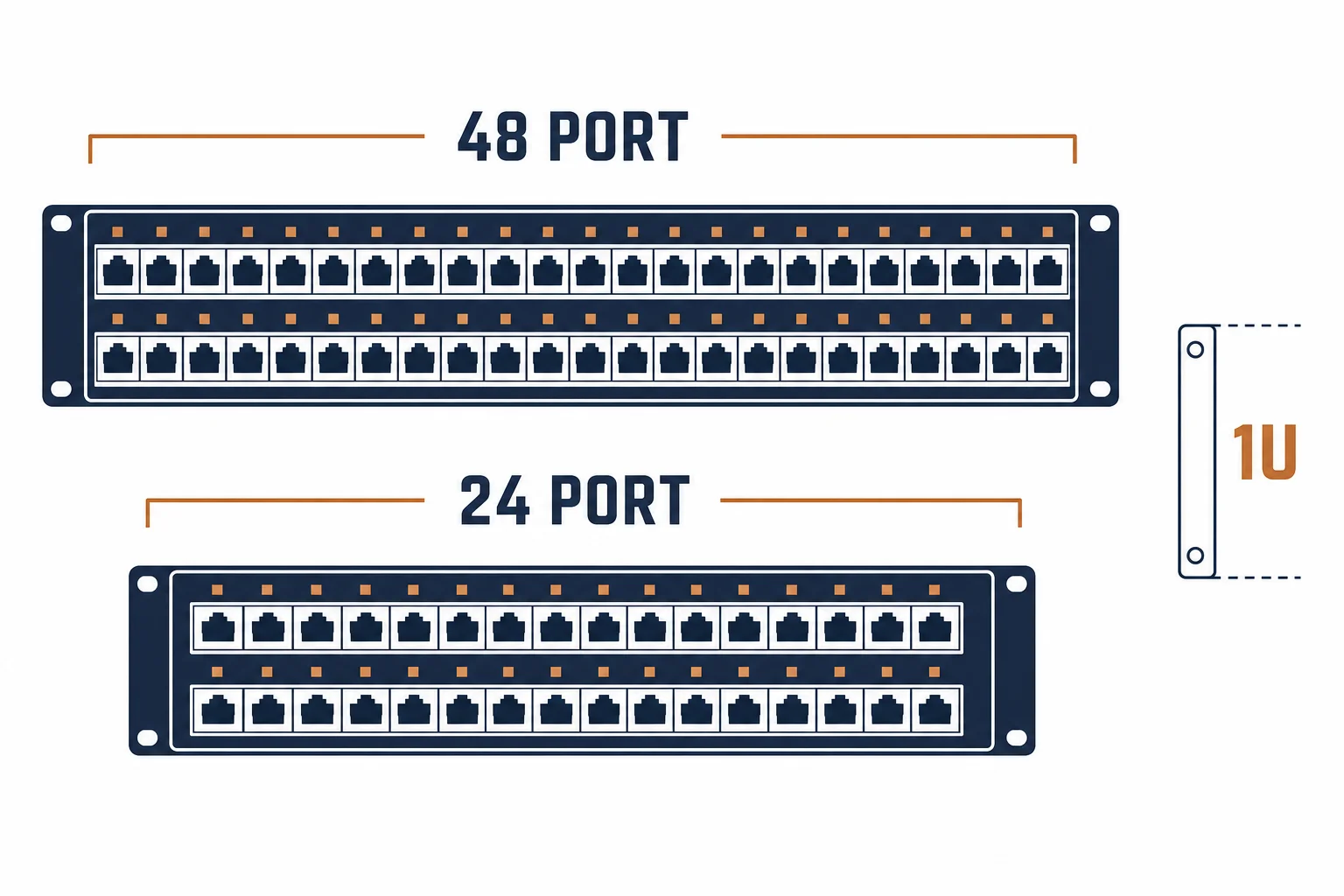
An unshielded patch panel is the default in offices: U/UTP cable lands on plastic jacks, the panel bolts into a 19-inch rack, and no bonding is required. It is cheaper than a shielded panel and, in most buildings, electrically sufficient – the shielding argument only wins where interference is real.
This is the unshielded panel guide: when it is the right choice, how the category must match the cable, and the labelling that turns a row of ports into a maintainable network.
When Unshielded Is Correct
| The environment | The panel | The reason |
|---|---|---|
| Office, school, home | Unshielded | No significant interference |
| Light industrial | Depends on measurement | Shielding only if proven necessary |
| Drive cabinets, plant | Shielded | Interference is real |
| Data centre | Usually shielded at Cat6a | Density and noise |
The shielding decision follows measurement or experience of the environment, not the category of the cable alone.
The Category Matching
- Panel category must equal cable category
- Jacks are replaceable on keystone panels
- A higher panel on lower cable is wasted money
- A lower panel on higher cable caps the channel
The matching rule is the cheapest form of quality control: it costs nothing and prevents the most common performance loss.
Standards and Verification
| The reference | The relevance |
|---|---|
| TIA-568.2-D | Connecting hardware and administration |
| IEC 60603-7 | The jack interface |
| Field test | Permanent link test per port |
Per-SKU panel construction is not provided in the knowledge base. The category rule is standard; check the jack marking rather than the panel description.
Practical Notes
Unshielded panels are light and easy to mount, which encourages installing them quickly and labelling them badly. The labelling is what the next technician experiences – it deserves the same care as the termination.
Real-World Applications
The school fit-out
A school with 120 Cat6 drops: unshielded Cat6 panels in two cabinets, every port labelled by room – support calls resolved by description rather than by tracing.
The mismatched panel
A Cat5e panel left in place when the cable was upgraded to Cat6: every link tested at Category 5e. Panels replaced – the cabinet had been capping the whole floor.
The shielded overreach
Shielded panels specified for a quiet office: the bonding never completed because nothing required it. Unshielded panels used instead – simpler, cheaper, and no worse in that environment.
Related reading: The shielded alternative — blogs/news/cat6a-patch-panel
Related reading: Matching panel and cable category — blogs/news/cat6-patch-panel-buying
Frequently Asked Questions
Do I need a shielded patch panel?
Only where interference is present or the cable is shielded. Offices normally do not.
Does panel category matter?
Yes – a lower-category panel caps the channel regardless of the cable.
Are unshielded panels cheaper?
Yes, and they require no bonding, which also saves labour.
What matters most in the installation?
Correct termination and complete labelling.
Sourcing cables for a project, a store, or a private-label line? Contact our B2B sales team for specifications, certification evidence, and volume terms – FOB and CIF options available. Request a quote or sample.