
Network Cable Multitool: The Trade
Quick answer / TL;DR: Short answer: use a multitool for service calls and occasional terminations, where carrying one item matters more than precision. For a project of more than a few dozen terminations, use a dedicated ratchet crimper and a proper punch-down tool – the difference shows up as intermittent links weeks later, not as a failed crimp on the bench.
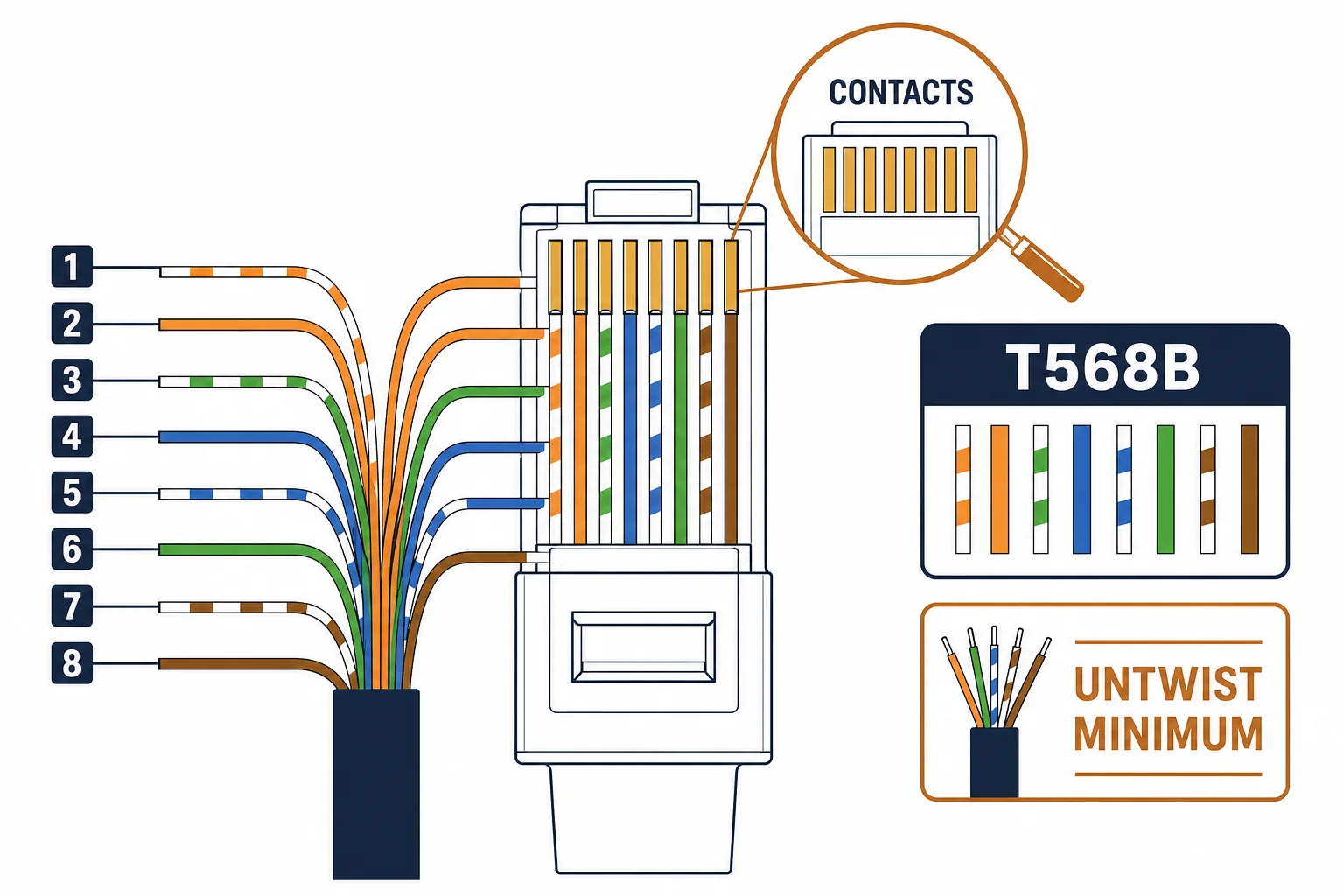
A network cable multitool combines stripping, cutting, crimping and sometimes punching into one body. It is convenient for a service bag and compromised for production work: the die that crimps is rarely as precise as a dedicated crimper, and the stripper that fits every jacket nicks some of them.
This is the multitool guide: what the combined tool does well, the jobs where it costs more than it saves, and the minimum kit for reliable work.
What a Multitool Does Well
| The function | The quality | The use |
|---|---|---|
| Cut | Good | Any jacket |
| Strip | Acceptable | Occasional work |
| Crimp | Compromised | A few plugs |
| Punch | Rarely included | Small jobs |
The cut and strip functions are the strongest; the crimp is where the compromise lives.
Where It Costs More
- Ratchet action is often absent, so crimp pressure varies
- The die may not match the plug brand precisely
- Stripping blades nick conductors on thin jackets
- Repeated use wears the mechanism before the blades
The costs appear as intermittent faults rather than obvious failures, which is why they are hard to attribute to the tool.
The Minimum Kit
| The tool | The job |
|---|---|
| Ratchet crimper | RJ45 plugs |
| Punch-down tool | Jacks and panels |
| Cable snip | Square cuts |
| Pin-map tester | Fault finding |
Four tools cover the work; the multitool replaces them only when space or weight is the constraint.
Standards and Verification
| The reference | The relevance |
|---|---|
| TIA-568.2-D | Termination practice |
| IEC 60603-7 | The plug interface |
| Field test | Pin map per terminated end |
Per-SKU tool specifications are not provided in the knowledge base. The tool roles are standard; test the first few terminations from any new tool.
Real-World Applications
The service bag
A field engineer with one multitool and a tester: two terminations on a call, both tested – the tool adequate for the job it was carried for.
The production run
A hundred plugs crimped with a multitool: nine intermittent failures within a month. Re-terminated with a ratchet crimper – the tool had been the variable.
The nicked conductor
A stripper that nicked one conductor on every fifth cable: the links passed continuity but failed at gigabit. A dedicated stripper used – the fault rate went to zero.
Related reading: The kit it belongs in — blogs/news/ethernet-installation-kit
Related reading: The plug specification it must match — blogs/news/ethernet-plug-buying
Frequently Asked Questions
Is a multitool good enough?
For occasional terminations, yes. For volume, dedicated tools produce more reliable joints.
What is the most important function?
The crimp – and it is the one multitools compromise most.
Do I still need a punch-down tool?
Yes, unless all your jacks are toolless.
How do I check a new tool?
Terminate three plugs and test them before trusting a batch.
Sourcing cables for a project, a store, or a private-label line? Contact our B2B sales team for specifications, certification evidence, and volume terms – FOB and CIF options available. Request a quote or sample.