
HDMI Coax Modulator: Digital to RF
Quick answer / TL;DR: Short answer: an HDMI-to-coax modulator creates a DVB-T or ATSC channel from an HDMI source, distributed on existing coax. Plan a free channel, keep the output level balanced with existing multiplexes, and accept a resolution ceiling – usually 1080p – because the RF channel has far less capacity than HDMI.
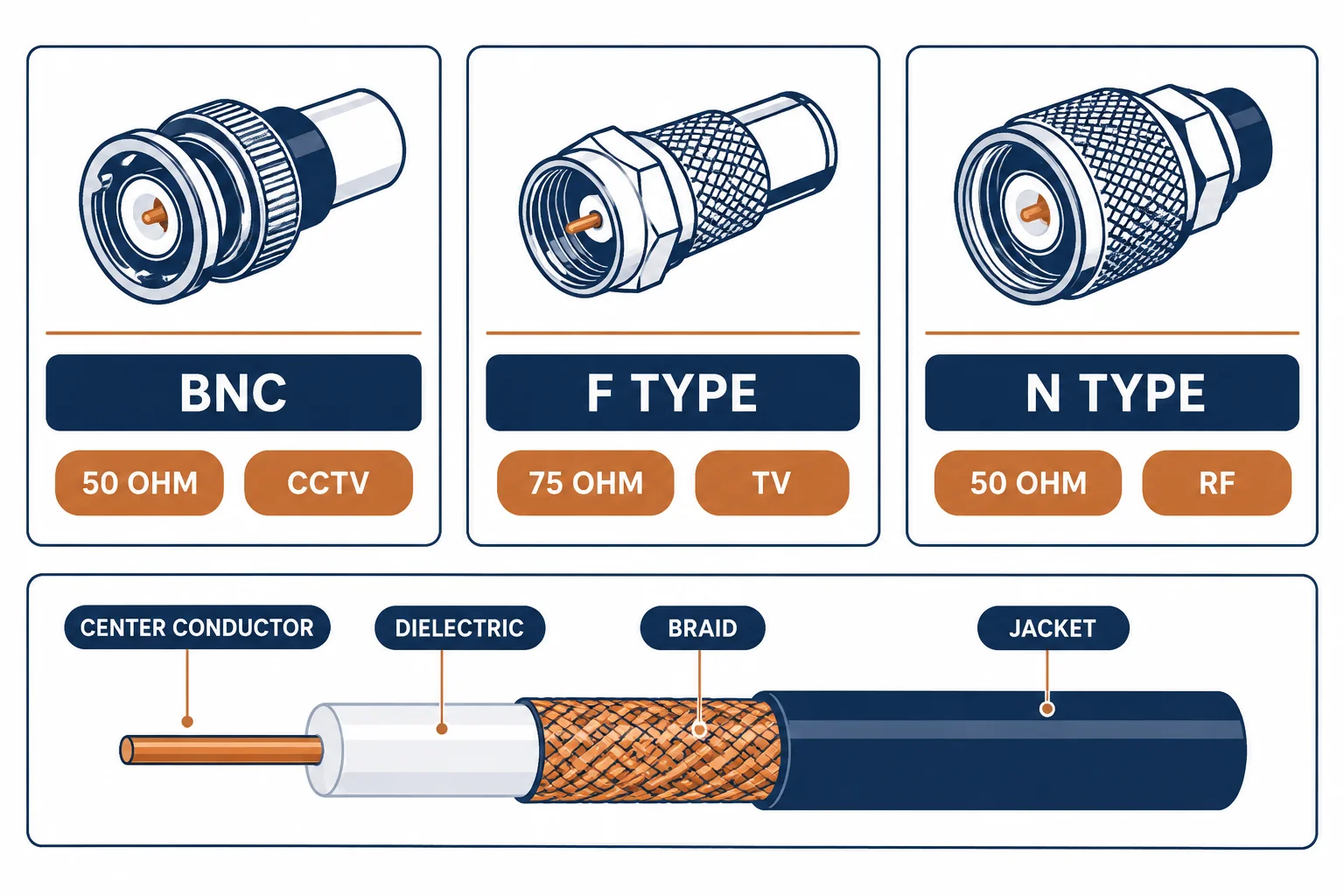
An HDMI coax modulator converts an HDMI source into a television channel carried on coaxial cable, so existing aerial wiring can distribute a signal to every TV in a building. It is the tool for hotels, sports bars and large homes where re-cabling is impossible.
This is the modulator guide: how the conversion works, the channel planning that keeps it clean, and the resolution ceiling that makes it a distribution tool rather than a quality solution.
How the Conversion Works
| The stage | The function | The limit |
|---|---|---|
| Capture | HDMI input decoded | Resolution ceiling |
| Encode | Compressed to a transport stream | Bitrate budget |
| Modulate | Placed on an RF channel | Channel bandwidth |
| Combine | Merged with aerial feeds | Level matching |
The chain is a full encode and modulate, which is why quality is set by the bitrate rather than the HDMI source.
Channel Planning
- Choose an unused channel in the local plan
- Keep output level similar to existing multiplexes
- Avoid adjacent-channel interference
- Document the channel for the site
The planning is broadcast discipline applied at small scale: a badly placed channel interferes with the ones around it.
The Resolution Ceiling
| The source | The modulator output | The reality |
|---|---|---|
| 4K HDR | 1080p typically | Downscaled |
| 1080p | 1080p | Matched |
| Sport at high frame rate | Often reduced | Check the specification |
The ceiling is the point: this is distribution to many screens, not a way to move a 4K signal.
Standards and Verification
| The reference | The relevance |
|---|---|
| DVB-T / ATSC | The RF standards |
| IEC 61169 | Coaxial connectors |
| Field test | Channel scan at a receiver |
Per-SKU output standards are not provided in the knowledge base. The RF standards are regional; confirm the modulator matches the local broadcast standard.
Practical Notes
Modulators are often installed once and forgotten, so label the unit with its channel and source. The next person to touch the distribution system will otherwise spend an hour scanning for a channel nobody documented.
Real-World Applications
The sports bar
One source distributed to twelve screens on existing coax: a modulator on a free channel, levels balanced – every screen showing the same feed without new cabling.
The hotel system
An in-house information channel added to the aerial distribution: the modulator inserted in the headend, documented – guests found it on the channel list.
The adjacent-channel problem
A modulator placed next to a strong multiplex: interference on both. Moved two channels away – the planning error corrected.
Related reading: The coaxial connector families — blogs/news/coaxial-cable-wholesalers
Related reading: RF to HDMI in the other direction — blogs/news/coax-to-hdmi-adapter
Frequently Asked Questions
What does an HDMI coax modulator do?
Converts HDMI into a television channel carried on coaxial cable.
What resolution does it support?
Usually up to 1080p; the RF channel cannot carry 4K.
Do I need a licence?
Check local rules for in-building RF distribution.
Why is the picture soft?
The bitrate budget of the RF channel, not the HDMI source, sets quality.
Sourcing cables for a project, a store, or a private-label line? Contact our B2B sales team for specifications, certification evidence, and volume terms – FOB and CIF options available. Request a quote or sample.