
Cat7 Bulk Cable: Class F by the Reel
Quick answer / TL;DR: Short answer: buy Cat7 bulk only for a whole-channel Class F design using GG45 or TERA connectors. Reel quantities follow the same measured-route arithmetic as any category, but the handling is harder: larger diameter, stiffer, bigger bend radius. If the project will terminate in RJ45, Cat6a is the correct buy – it is certified with that interface.
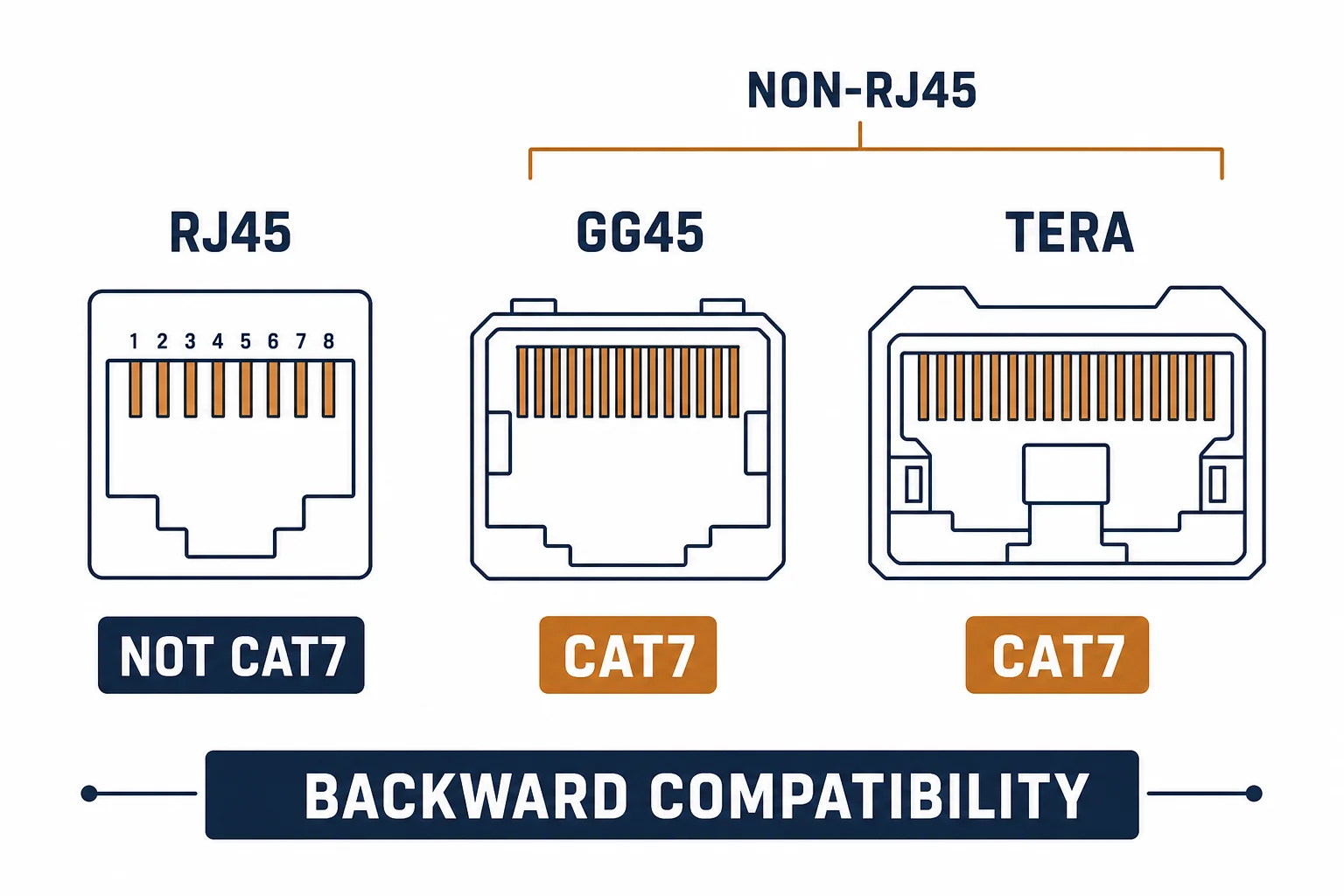
Cat7 bulk cable is S/FTP: a foil around each pair and a braid around the bundle, rated to 600 MHz. Buying it by the reel commits a project to the full Class F system – cable, jacks, panels and cords – because the standard's connector is not the RJ45 the rest of the building probably uses.
This is the bulk Cat7 guide: the construction, the system commitment, and the arithmetic that decides whether a reel is the right purchase.
The Construction
| The element | Cat7 bulk | The effect |
|---|---|---|
| Screen | Foil per pair plus braid | Best immunity available |
| Band | 600 MHz | Class F |
| Diameter | Large | Fewer cables per tray |
| Termination | GG45 or TERA | Not RJ45 |
The construction is the most protective in the twisted-pair family and the least forgiving to install.
The System Commitment
- Jacks: GG45 or TERA throughout
- Panels: matched to the same interface
- Cords: factory-made with the matching plugs
- Test: at Class F, not at Cat6a
One RJ45 element in the channel redefines the result as Cat6a at best, which makes the bulk purchase pointless.
The Quantity Arithmetic
| The element | The allowance |
|---|---|
| Measured route | Horizontal plus vertical |
| Service loops | About a metre per end |
| Margin | Ten percent – stiffer cable, more waste |
| Rounding | To the reel size |
The margin is higher than for Cat6a because the bend radius makes more routes fail on the first attempt.
Standards and Verification
| The reference | The relevance |
|---|---|
| ISO/IEC 11801-1 | Class F |
| IEC 61156 | Cable construction and test |
| IEC 60603-7-7 | GG45 interface |
| Field test | Channel test at Class F |
Per-SKU reel lengths are not provided in the knowledge base. The class definitions are standard; confirm the connector interface before ordering bulk.
Practical Notes
Cat7 reels are heavy and the cable does not coil tightly. Plan the payout and the storage before delivery: a reel that cannot be handled safely becomes cable that cannot be pulled cleanly.
Real-World Applications
The broadcast facility
A studio specifying Class F end to end: Cat7 bulk, GG45 jacks and panels, factory cords – the channel tested at the class it was designed for.
The RJ45 compromise
Cat7 bulk ordered for a project that terminated in RJ45: the channels tested at Cat6a. Cat6a would have cost less for the same result – the interface decision should have come first.
The bend radius casualty
A reel pulled around a tight corner: two sections with crushed pair foils. The affected length cut out and re-pulled – the margin absorbed it, barely.
Related reading: The Cat7 connector problem — blogs/news/cat7-connector-problem
Related reading: The Class F panel interface — blogs/news/cat7-patch-panel
Frequently Asked Questions
What is Cat7 bulk cable?
S/FTP cable rated to 600 MHz, supplied on reels for permanent installation.
Can I terminate Cat7 in RJ45?
Yes physically, but the channel is then Cat6a at best.
Is Cat7 harder to install?
Yes: larger diameter, stiffer, and a bigger minimum bend radius.
Do I need Cat7 for 10G?
No – Cat6a carries 10G to 100 m with the standard connector.
Sourcing cables for a project, a store, or a private-label line? Contact our B2B sales team for specifications, certification evidence, and volume terms – FOB and CIF options available. Request a quote or sample.