
Cat5e vs Cat6a: The Upgrade Case
Quick answer / TL;DR: Short answer: Cat5e is a 100 MHz, 1 GbE cable to 100 m; Cat6a is a 500 MHz, 10GBASE-T cable to 100 m and is usually shielded. Upgrade when you need 10G, longer PoE headroom, or a 20-year install; stay with Cat5e for gigabit access layers, homes and patch cords.
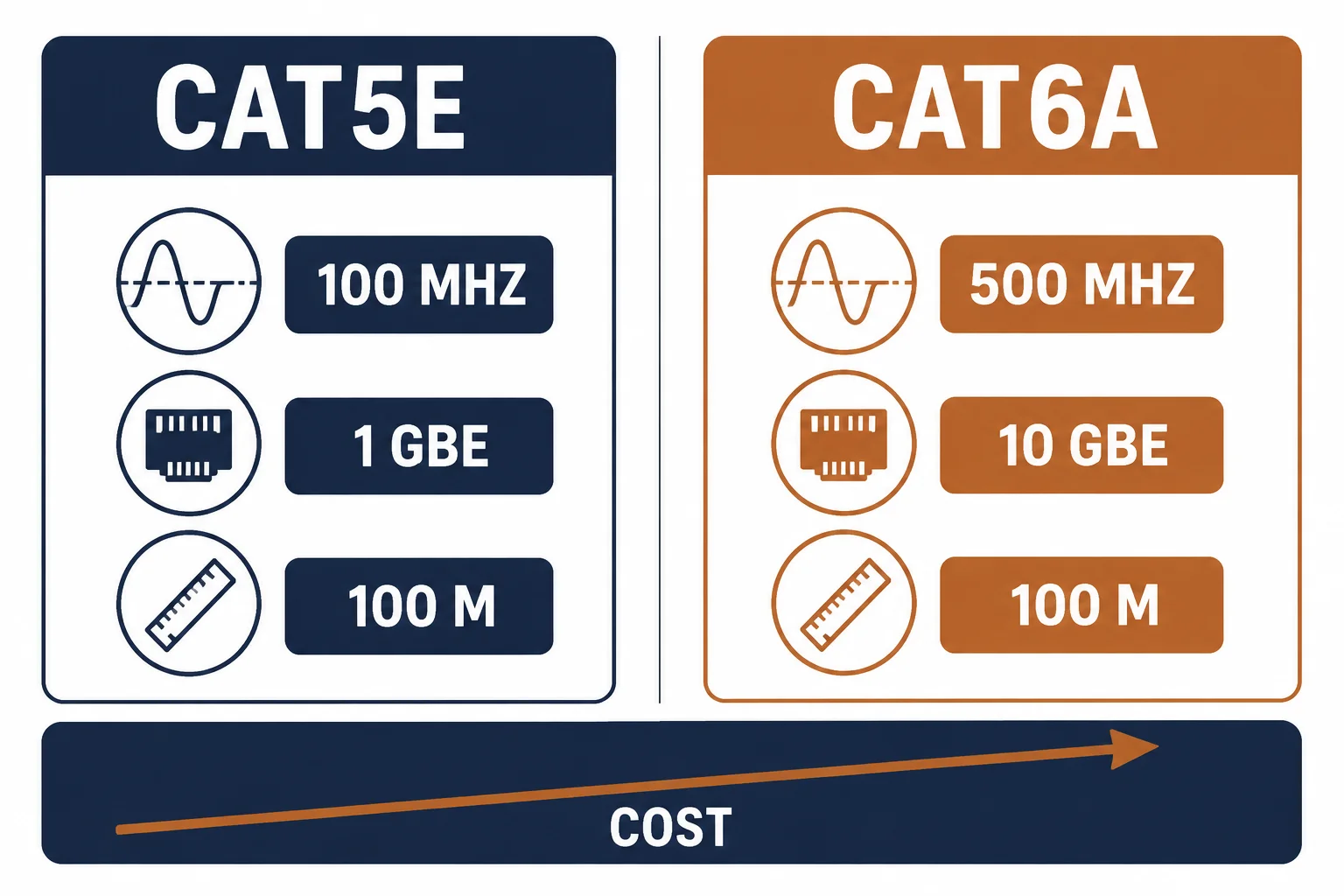
Cat5e and Cat6a sit at opposite ends of the copper ladder still in production: 100 MHz against 500 MHz, gigabit against 10G, unshielded against typically shielded. The upgrade is worth paying for in specific conditions – and a waste in others.
This is the comparison: the four differences that matter, the cost of each, and the decision table for real projects.
The Four Differences
| The dimension | Cat5e | Cat6a |
|---|---|---|
| Band | 100 MHz | 500 MHz |
| Speed at 100 m | 1 GbE | 10 GbE |
| Shield | None | Usually F/UTP or S/FTP |
| Diameter | Smaller, easier | Larger, stiffer |
The four dimensions are ordered by consequence: the band sets the speed, the shield decides the grounding work, the diameter decides the conduit.
What the Upgrade Costs
- Cable: Cat6a runs higher per metre, especially shielded
- Connectors and panels: shielded components cost more
- Labor: stiffer cable, tighter bend radius, slower pulls
- Grounding: shielded systems need bonding at the panel
The cost is a system cost. Comparing cable prices alone understates the Cat6a premium by the grounding and labor lines.
The Decision Table
| The situation | The choice |
|---|---|
| Home gigabit | Cat5e or Cat6 |
| Office access layer, 20-year horizon | Cat6a |
| Any 10G requirement | Cat6a – Cat5e cannot |
| Short patch cords | Cat5e or Cat6 |
Standards and Verification
| The reference | The relevance |
|---|---|
| TIA-568.2-D | Category 5e and 6A requirements |
| ISO/IEC 11801-1 | Class D and Class EA |
| IEEE 802.3an | 10GBASE-T |
| Field test | Channel test at the installed category |
Per-SKU pricing and test data are not provided in the knowledge base. The performance difference is standard; compare installed cost including connectors, labor and grounding.
Real-World Applications
The 10G design studio
Shared media storage over 10G: Cat6a to every desk – the band the workflow needs, the shield budgeted from the start.
The home that stayed gigabit
A house wired for gigabit internet and streaming: Cat5e for the drops – the upgrade money spent on the router instead.
The half-upgraded floor
Cat6a cable with Cat5e jacks left in place: the channel tested at the lower category – the jacks replaced before handover.
Related reading: The budget tier in detail? Read the Cat5e network cable guide — blogs/news/cat5e-network-cable-line
Related reading: What Cat5 really delivers? Read the speed guide — blogs/news/cat5-cable-speed
Frequently Asked Questions
Is Cat6a worth it over Cat5e?
When you need 10G, longer PoE headroom, or a long-life install. For plain gigabit, Cat5e does the job at lower total cost.
Can Cat5e run 10G?
No – 10GBASE-T needs Cat6a for 100 m. Short runs may negotiate on Cat6, but Cat5e is outside the rating.
Does Cat6a have to be shielded?
In practice most Cat6a is F/UTP or S/FTP. Shielded construction brings grounding requirements to the installation.
What is the biggest hidden cost of Cat6a?
The system cost: shielded jacks, panels, bonding and slower installation – not the cable alone.
Sourcing cables for a project, a store, or a private-label line? Contact our B2B sales team for specifications, certification evidence, and volume terms – FOB and CIF options available. Request a quote or sample.