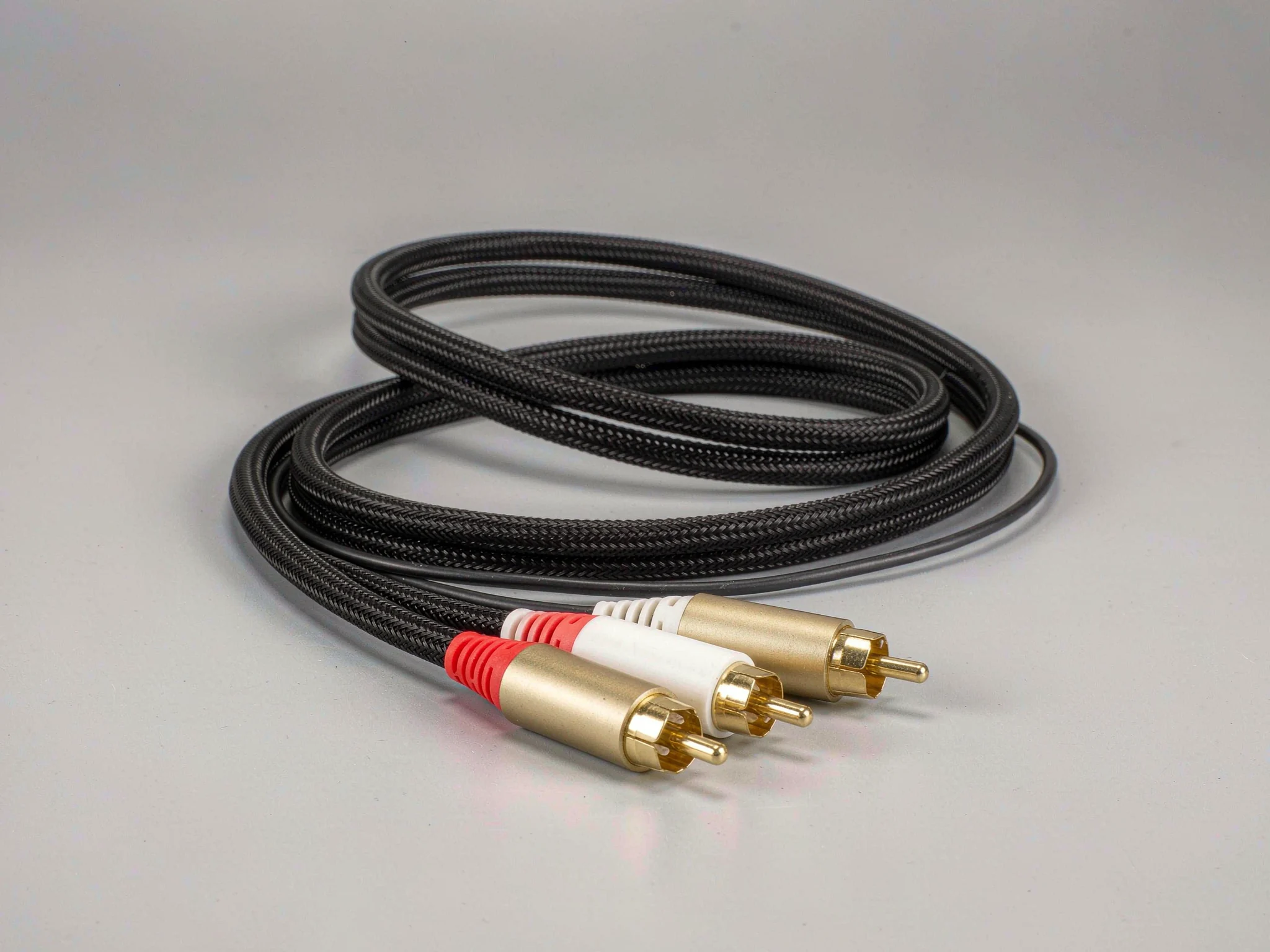
Quick answer: Judge a plug on four measurable traits: the contact style inside the barrel, the outside diameter of the insulation, the stacking depth behind the plug, and the metal under the plating. None of those need a listening session. Fit and steady spring pressure decide whether the joint stays stable, and a plug that sits loosely will not be rescued by its finish.
Search results for this phrase return pages of slogans about oxygen free copper and gold, and almost no measurements. A banana plug is a small spring loaded contact, and the traits that predict whether it holds are visible with a rule and a pair of calipers. Start there, because a plug that does not fit cannot perform well in any other respect.

Contact style inside the barrel
The part that touches the post wall is a spring, and the shape of that spring decides how the pressure behaves over hundreds of insertions.
Split pin
Four cuts along the pin create separate leaves that press outward. It grips well in a clean post, tolerates slight size differences, and loses tension permanently once bent too far. Cheap versions use thin metal that folds rather than springs.
Leaf spring and tube types
A leaf spring inside a smooth tube gives even pressure around the circumference and resists snagging on threads. Tube designs can be tighter to insert, which matters on a receiver that is already hard to reach.
Insulation diameter, measured not guessed
The insulating sleeve, often called the boot, is usually wider than the metal barrel and is the part that fouls a recessed terminal cup. Measure across the widest point of the boot, not the pin.
Two plugs from different makers can share a four millimetre pin and differ by several millimetres at the boot. Where terminals sit in a plastic well, that difference decides whether the plug seats or stops on the rim.
Stacking and side by side clearance
Some plugs accept a second plug into the back, which lets two cables share one post. Stacking adds length behind the terminal, so it works on open posts and fails against a cabinet back or a shelf.
| Trait | How to check it | Fits most gear when | Failure it prevents |
|---|
| Contact spring | Press the pin, release, watch it return | Leaves spring back without a set | Loose grip after a few swaps |
| Boot diameter | Calipers across the widest point | Narrow enough for a recessed cup | Plug stops on the rim |
| Rear depth | Measure behind the shoulder | Short, with no stacking socket | Fouling the wall behind the rack |
| Base metal | Magnet test and weight in hand | Brass body, plated contact | Threads that strip on first use |
Metal and plating in proportion
Plating is a corrosion barrier, not a resistance cure. Gold resists tarnish at the contact patch, which keeps the joint stable in humid rooms, but it is soft and thin coatings wear through after repeated insertion. Nickel wears longer and tarnishes sooner.
Under the plating, brass machines cleanly and holds threads. Steel bodies with decorative plating are heavier and rust at scratches, and they are usually the plugs that seize in a post after a season.
Checking a plug before you commit
Ask for the boot diameter and the pin length as numbers, not as adjectives. If a listing gives neither, the plug is a gamble whatever the photographs suggest.
Then test one plug in the hardest terminal you own, which is usually the narrowest recess on a compact receiver. A plug that seats there with a firm push and a small click of the spring will work everywhere else in the house.
Practical scenarios
- Replacing molded ends on a store bought set: fit screw type plugs so the existing cable keeps its length and you can re use the copper.
- Speaker switch box with two pairs per post: stacking plugs save space, provided the box sits clear of the wall.
- Wall plate with shallow cups: a narrow boot and a short pin matter more than the contact style here.
- Bi wire into one cabinet: four plugs per speaker, so keep every boot the same size or two of them will not fit side by side.
FAQ
Are gold plated banana plugs better?
They resist tarnish, which helps in damp rooms. The plating does not lower resistance on its own, because the current still passes through the base metal underneath.
What size is a standard banana plug?
The common pin is four millimetres across, which suits most binding posts with a hole in the end. Boot diameter and pin length vary far more than the pin size.
Can two plugs share one binding post?
Yes if the plug has a rear socket and the post is open at the back. A stacked pair adds leverage, so support the cable rather than letting it hang from the joint.
Next step
Measure your terminals, then buy to the numbers. Compare dual banana connectors for paired runs, check banana jack speaker leads for pre made sets, and read the banana jack guide for pin and boot dimensions.
See the matching cables and adapters