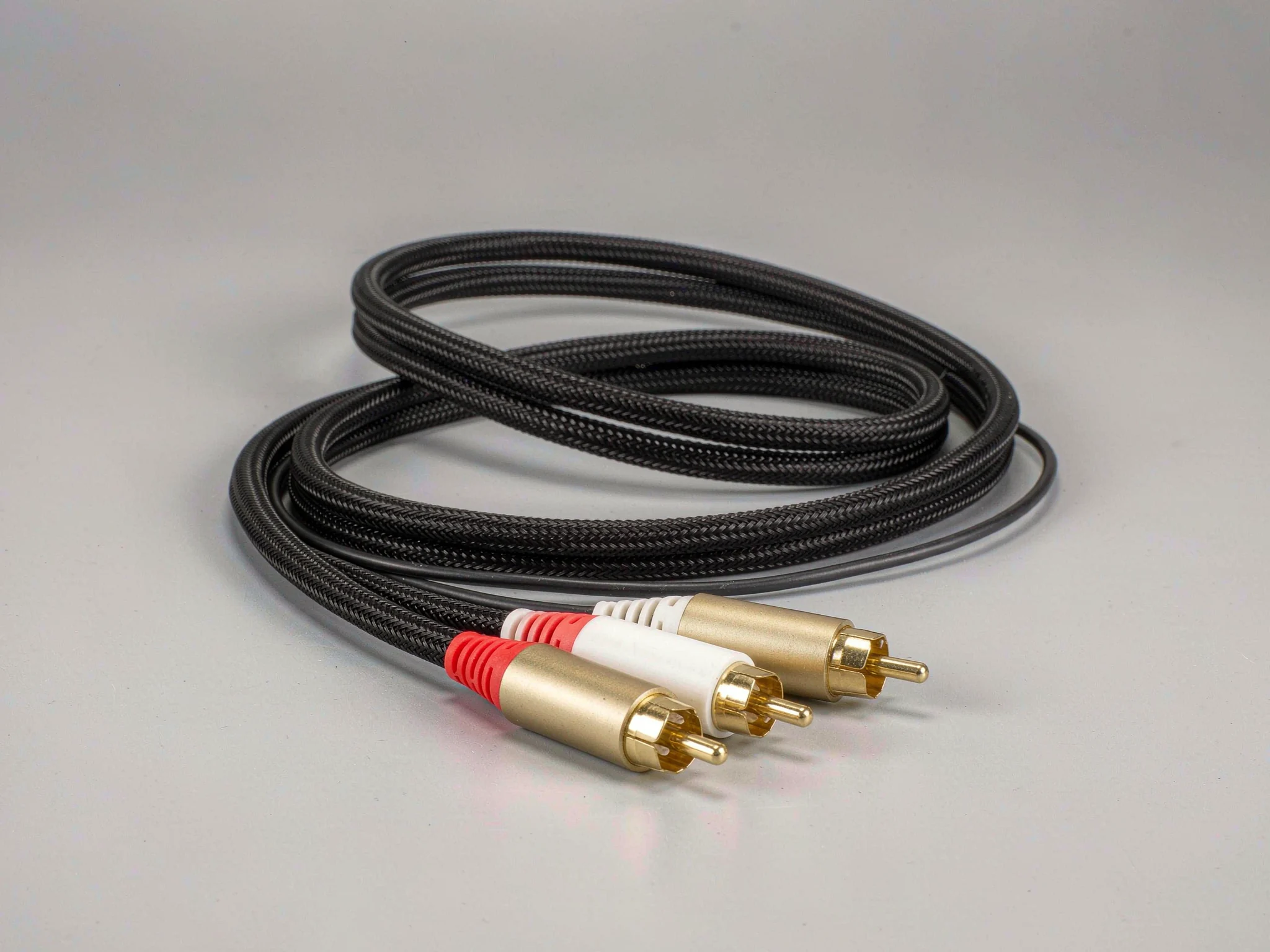
Quick answer: The right car audio speaker cable is chosen by circuit, not by a badge on the pack. Speaker runs from an amplifier need 16 to 12 AWG depending on length, the amplifier power lead needs heavier copper sized to its fuse, and the ground return should match that power lead. Route signal and speaker lines away from the power run and the ignition harness.
The amplifier is bolted to the seat back, the door panels are off, and the shop sells one reel labeled as speaker cable for every job in the car. Power, ground and speaker circuits ask for different sizes, and treating them as one job is how a system ends up with dimming lights or a whine that rises with engine speed.

Three circuits, three answers
A car audio install runs three kinds of copper. One carries current from the battery to the amplifier, one returns it to the chassis, and one carries amplified signal from the amplifier to each speaker. Each has its own size rule, and mixing them up wastes money or creates noise.
Power lead from battery to amp
The fuse at the battery sets the ceiling, and the cable must carry that current over the length of the car without excessive drop. A long run to a hatchback needs more copper than a short run to a unit under the seat. The fuse protects the cable, so the cable is never smaller than the fuse expects.
Ground return at the amplifier
Current leaves the amplifier on the ground lead, so that lead has to be at least as capable as the power lead. A short, clean chassis connection with paint removed beats a long thin cable to a distant bolt. A weak ground shows up as heat, dimming or noise that follows the engine.
Speaker runs from amp to door
These carry the amplified signal, and their resistance sits in series with a 4 ohm or 2 ohm load. Door runs are short, so 16 AWG often works, while a run to rear speakers through a long cabin can justify 14 or 12 AWG. Factory wiring in the door boot is usually thin, which limits what can be gained there.
Routing away from ignition noise
Much of the whine people blame on speaker cable comes from running signal lines beside the power cable or the ignition harness. Keep the power lead down one side of the car and the signal lines down the other. Where they must cross, cross at right angles rather than running parallel for feet.
Gauge by circuit, not by package
A single gauge number across the whole install is convenient for the shop and wrong for the car. Read each circuit, measure its length and choose from there.
| Circuit in the car | Typical current | Gauge range | Length sensitivity | Routing rule |
|---|
| Battery to amp | High | 8 to 4 AWG | Strong, 15 ft or more | Separate side of the car |
| Amp chassis ground | High | Same as power lead | Keep it under 3 ft | Bare metal, sealed after |
| Amp to door speaker | Medium | 16 to 14 AWG | Moderate | Through the factory boot |
| Amp to rear deck | Medium | 14 to 12 AWG | Strong in long cabins | Along the sill, not the tunnel |
Copper in a hot and damp space
A door cavity sees heat, condensation and vibration. Copper clad aluminium has higher resistance than bare copper at the same gauge, and its aluminium core corrodes faster once moisture reaches a cut end. In a door boot, bare copper and a sealed end are worth the small extra spend.
Ends and connectors
Speaker terminals in a car rattle loose. Crimped terminals with a proper strain relief hold better than twisted bare wire, and a little dielectric grease at the chassis ground keeps corrosion out. Check every crimp by pulling on it before the panel goes back on.
What to check before the trim goes back
Measure resistance end to end on each speaker line with the amplifier disconnected, confirm the ground reads close to zero against the chassis, and listen with the engine running as well as off. Noise that only appears with the engine points to routing or ground, not to the cable gauge.
Practical scenarios
- Hatchback sub install: a long power run to the cargo area needs heavier copper and a ground kept short at the same end.
- Factory speaker swap: reuse the door wiring if it is sound, since the boot usually limits any new conductor.
- Crew cab truck: rear speaker runs are long enough to justify 14 AWG rather than 18 AWG factory wire.
- Coastal climate: sealed crimps and tinned copper survive salt air better than open twists.
FAQ
Does thicker speaker wire make a car system louder?
Only if the existing wire was losing a meaningful share of the voltage. Gains come from the amplifier and the load, and short door runs rarely benefit from going below 16 AWG.
Should the ground cable match the power cable?
Yes. The same current flows through both, so a thin ground undoes the work of a heavy power lead and can add noise.
Can speaker wire run beside the power cable?
It can, but a parallel run next to a high current lead is the usual source of whine. Separate the paths, and cross at right angles when they must meet.
Next step
Plan the whole loom with the car speaker wiring guide, choose ends from the speaker wire connector list, and size the return with the amplifier ground notes.
See the matching cables and adapters