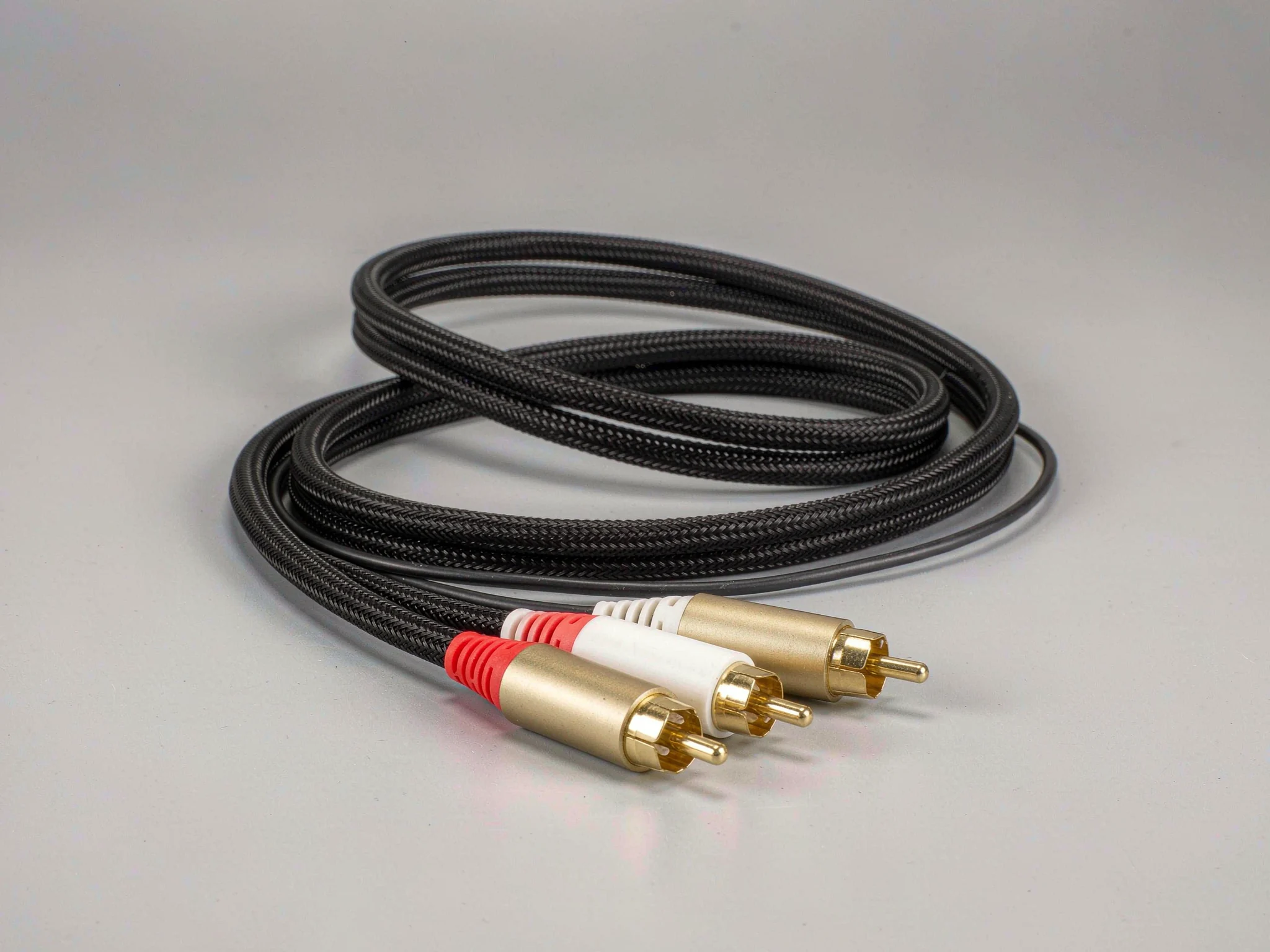
Quick answer: Fitting banana plugs for speaker cable comes down to three decisions. A screw clamp is fast and reversible, a soldered joint is permanent and needs a hot iron, and both must end with zero bare strands outside the sleeve. Strip only what the barrel needs, twist the strands, and check with a meter that the two plugs read open, not shorted.
The plugs are on the bench, the cable is cut, and the first mistake is usually made before any metal touches metal: too much jacket comes off. Strands then spread at the entry point, one of them touches the neighbouring barrel, and the amplifier sees a short at the terminal instead of a speaker. A tidy joint is mostly about the strip length.

Measure the strip before cutting insulation
Hold the conductor beside the plug body and mark the depth of the joint chamber, not the whole barrel. The stripped section should reach the metal and stop there, leaving the jacket inside the strain relief. Excess length cannot be pushed back once the strands are twisted, and trimming afterwards leaves an uneven end that grips badly.
Screw clamp versus soldered joint
What a clamp joint does well
A set screw presses the bundle against a metal block. No heat, no flux, no waiting, and the plug can be reused on another cable. The weakness is that the screw only holds if the strands are tight and the chamber is full; a loose bundle slowly compresses and the joint goes intermittent after a few months of use.
What solder adds and costs
Solder wicks into the strands and makes one solid conductor, which is immune to loosening in the chamber. It also creates a stiff section right where the cable flexes, and a overheated pin can melt the plastic body or let the tip drift out of alignment. A good soldered joint needs a clean iron, a short dwell and no movement while it cools.
Insulation and shorting at the binding post
Two plugs on one terminal pair sit close together, so the plastic sleeve is a functional part rather than trim. Slide it forward until it meets the terminal face and confirm no bare metal is visible from any angle. Where the posts are very close, a shorter plug body or an angled design gives more clearance than forcing a long barrel in and leaving the sleeve short of the block.
Checking the finished pair
Before connecting anything, set a meter to continuity and touch the two plug tips: the reading must be open. Then check tip to tip on the same plug, which should read closed. Finally tug each plug firmly; a joint that moves under a light pull will move more under the weight of a cable hanging from a shelf. A pair that reads shorted instead means a strand is bridging the two barrels, and the plug has to be opened and rebuilt.
| Termination method | Tools needed | Skill level | Main insulation risk | Reusable |
|---|
| Set screw clamp | Stripper, small screwdriver | Beginner | Strands splayed past the sleeve | Yes |
| Crimp barrel | Stripper, crimp tool | Intermediate | Crimp over jacket, no metal contact | No |
| Soldered cup | Iron, solder, stand | Intermediate | Melted body, tip out of line | Rarely |
| Solder plus crimp | Iron and crimp tool | Experienced | Stiff joint, cracked strands | No |
Practical scenarios
- First attempt with a borrowed iron: Use the set screw type, since a cold joint is easy to redo and no heat reaches the plastic body.
- Cable that will be unplugged weekly: A soldered joint survives repeated handling better than a clamp that slowly compresses the bundle.
- Very fine stranded cable: Twist the strands tightly before insertion, because loose fine wire spreads at the chamber mouth and bridges to the sleeve edge.
- Amplifier terminals set close together: Test the finished pair with a meter before powering up, and shorten the plug body if the sleeves cannot reach the block.
FAQ
Can I fit banana plugs without soldering?
Yes. Clamp and crimp designs cover most home needs, and both avoid heat damage to the plug body. The trade is that a clamp can loosen and a crimp cannot be undone.
How much jacket should I strip?
Enough to fill the joint chamber and no more. The jacket should enter the strain relief, so the bend force is taken by insulation rather than by the strands themselves.
Why does the amplifier cut out after fitting new plugs?
Most likely a strand bridging the two barrels, or a sleeve that stops short of the terminal. Disconnect, inspect both plugs in daylight, and confirm with a meter that the pair reads open.
Next step
Pick the plug before you cut anything: banana cable connectors lists the clamp and crimp styles, banana jack cable options covers the socket side, and the banana jack guide explains the fit dimensions.
See the matching cables and adapters