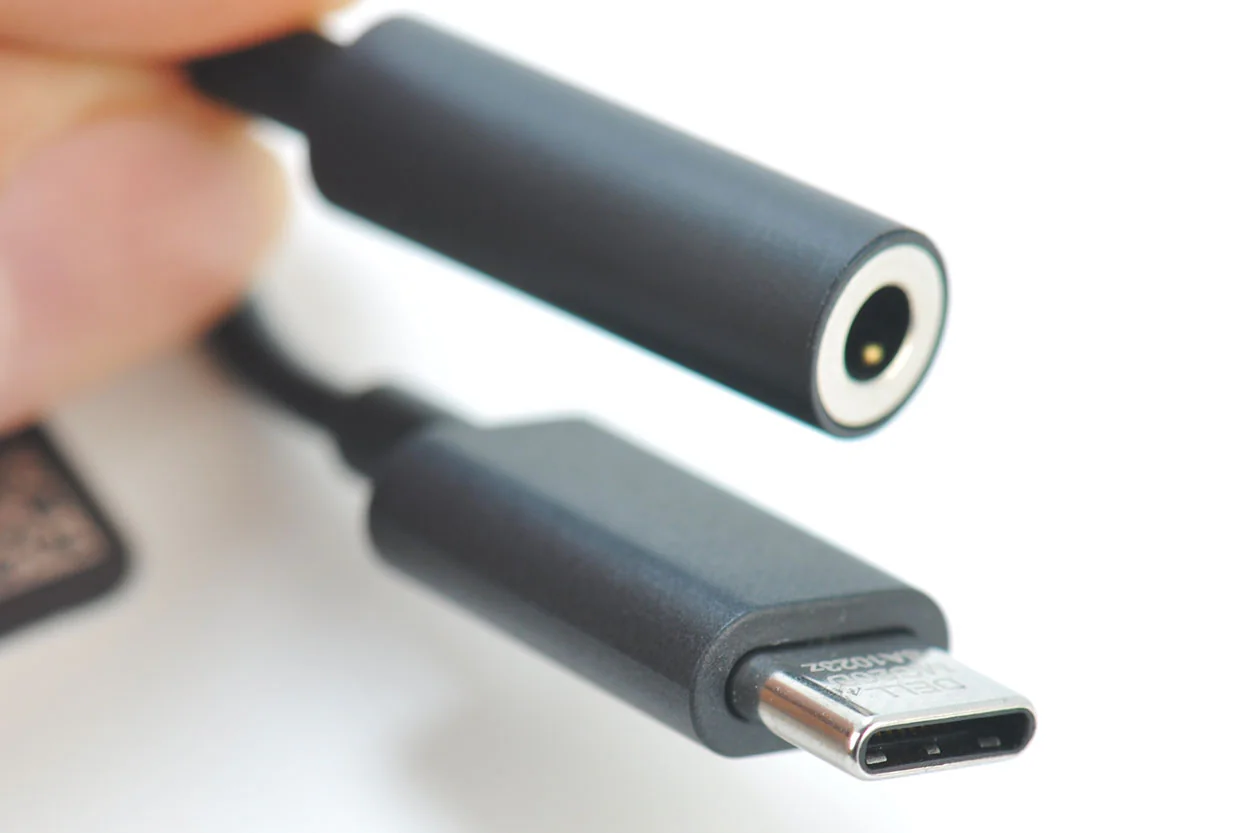
Quick answer: An audio jack to speaker cable adapter only moves a signal. A phone, laptop or television output is line level, measured in milliwatts, and cannot drive a passive speaker. You need a small amplifier between the two. The adapter is fine on the input side of that amplifier; the cable from the amplifier to the speaker is the only part that carries speaker current.
The phone has a headphone socket, the spare speaker has two spring terminals, and an adapter with a 3.5 mm plug on one end and two bare wires on the other looks like the missing link. Plugged in, the result is a faint distorted noise, or silence. Nothing is broken. The socket was never designed to deliver the current a speaker needs, and no adapter changes that.

What the jack on the device really is
A 3.5 mm socket on a phone, tablet or laptop is a headphone amplifier output. It produces a volt or two into a 32 ohm load and a few tens of milliwatts of power. A passive speaker wants several watts into 4 or 8 ohm. The gap is not a matter of cable quality; it is two orders of magnitude of power.
Milliwatts against watts
Headphone output is designed for small drivers close to the ear. Even a modest speaker needs far more current than the chip behind that socket can supply, which is why the sound collapses as soon as the volume rises.
Line level, headphone level and the difference
A line output, such as the red and white RCA sockets on a television or the main out on a mixer, is a fixed level signal with almost no current capability. A headphone output has a little more current but still nowhere near speaker level. Both are inputs to something, never outputs to a speaker.
| Source output | Signal level | What it can drive directly | Part needed in between |
|---|
| Phone headphone jack | Headphone level, milliwatts | Headphones only | Small amplifier with a 3.5 mm input |
| Laptop headphone jack | Headphone level, milliwatts | Headphones or powered speakers | Amplifier, or a powered speaker pair |
| Television RCA output | Line level, fixed | An amplifier input | Stereo amplifier with RCA inputs |
| Mixer main out | Line level, balanced or not | A power amplifier | Power amp, then speaker cable |
The amplifier in between
Any small amplifier with the right input will do the job: 3.5 mm, RCA, or both. Its output terminals then connect to the speaker with ordinary two conductor cable. That cable is the only run in the chain that carries speaker current, and it should be sized by length and impedance like any other speaker run.
Choosing a small amplifier
Match the amplifier to the speaker impedance printed on the cabinet, keep the power modest for a desktop setup, and leave room for the connector types you already own. A unit with spring terminals accepts 16 AWG bare wire; one with banana jacks accepts a plug.
Powered speakers are the exception
A powered speaker has its amplifier inside the cabinet, so the 3.5 mm or RCA cable carries only signal and the mains lead carries the power. That is a legitimate way to connect a phone to a speaker with no separate box, and it is the case where an adapter really is the whole answer.
Adapters, splitters and their limits
A splitter sends the same signal to two inputs; it does not increase power. Two passive speakers wired to one headphone plug will sound quieter than one, not louder. Treat every adapter as a signal part until you have traced what is on the other side of it.
Practical scenarios
- Phone to a bookshelf speaker: phone into a small amplifier with a 3.5 mm lead, amplifier to speaker with 16 AWG cable.
- Television to two speakers: RCA out to a stereo amplifier, then a pair of runs to the speakers.
- Shed workshop: a compact amplifier with a Bluetooth or jack input, one pair of outdoor rated cables to the speakers.
- Kitchen counter: powered speakers on the shelf, single 3.5 mm cable, no amplifier box and no speaker cable at all.
FAQ
Can I cut a 3.5 mm cable and connect it to a speaker?
You can make the connection, but the output will not drive the speaker properly. The socket cannot supply the current, so the result is quiet and distorted.
Will an adapter damage my phone or laptop?
Usually not, because the output is current limited. Driving a low impedance load hard for a long time is still a poor idea, so use an amplifier instead.
Do I need special speaker cable after the amplifier?
Ordinary two conductor cable is enough; choose the gauge from the run length and the speaker impedance. The special part is the amplifier, not the wire.
Next step
Trace the chain from source to speaker before buying an adapter. The 3.5mm audio cable guide covers the signal side, 3.5mm to speaker wire adapters are for the input of an amplifier rather than its output, and the aux cable guide explains what a plain jack lead can and cannot do.
See the matching cables and adapters