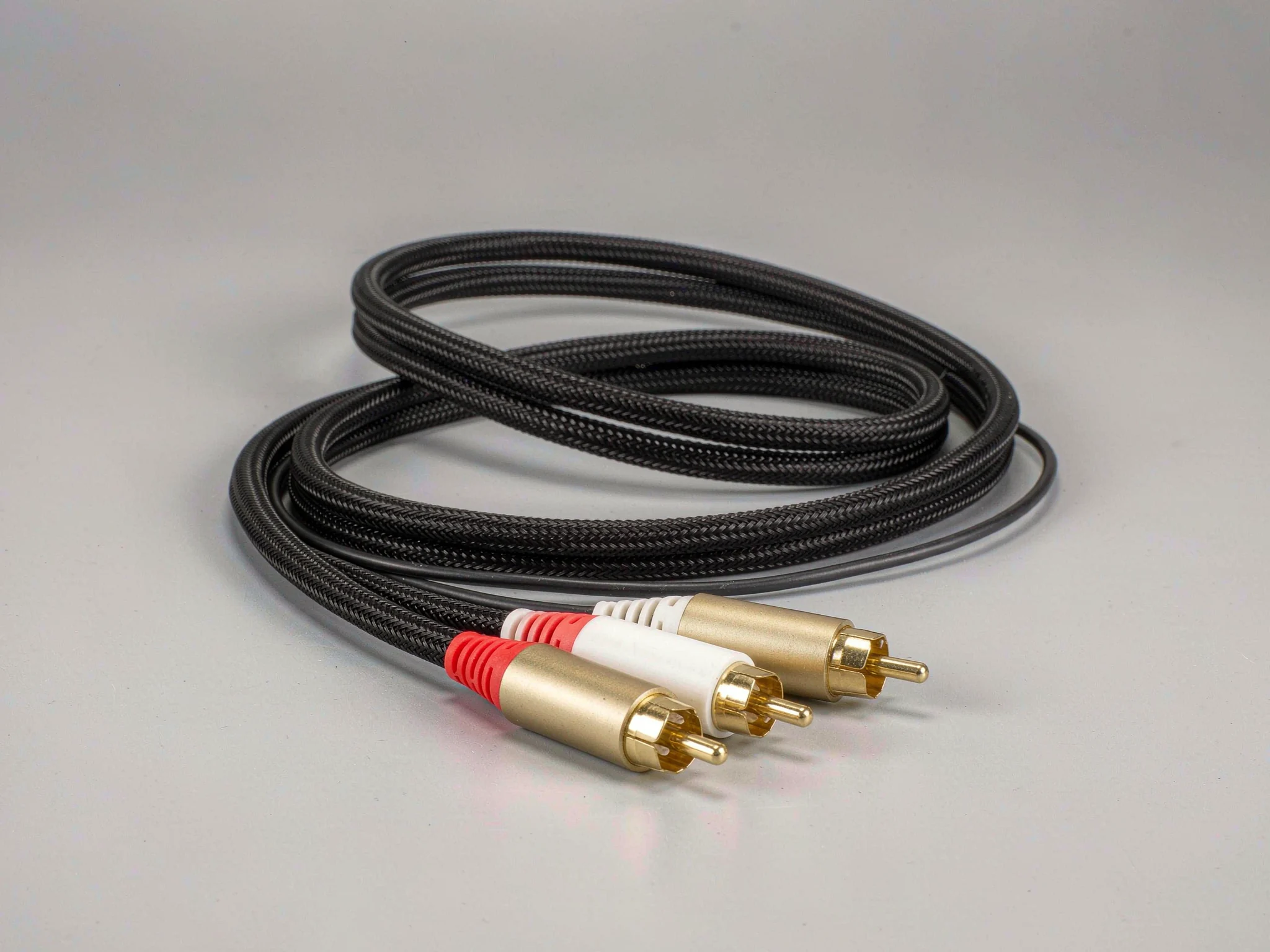
Quick answer: Car speaker cable connectors fail for three reasons: the spade is the wrong width for the terminal tab, the crimp was made with the wrong die, and the joint sits in a door that fills with condensation. Match the tab width, crimp the conductor and the insulation in separate zones, then seal the finished joint. A connector that fits loosely will hum, rattle and eventually arc.
The door panel is back on, the screws are tight, and one speaker buzzes over bumps. Nine times out of ten the driver is fine and the fault is a spade that was pushed onto a tab of the wrong width, or a crimp that gripped insulation instead of copper. The repair is cheap, but only if the door comes apart once.

Spade width has to match the tab
Factory speakers and aftermarket drivers use a small family of tab widths, and a spade that is one size too wide will sit on the tab at an angle and grip almost nothing. It pushes on, feels attached, and comes loose the first time the door slams. Width is the first thing to measure.
Measure the tab, not the wire
Use a caliper or a set of known spades as gauges. Common widths are around 0.110, 0.187 and 0.250 inch, which is roughly 2.8, 4.8 and 6.3 millimetres. Order the size that slides on with light pressure and covers the full tab, not the one that happens to be in the drawer.
Crimp quality decides the joint
A crimp is a cold weld made by deformation. The tool has to match the terminal, and the terminal has to match the wire gauge. Pliers squeeze a terminal into a shape that looks acceptable and holds a fraction of the current, and the resistance of that joint rises with every thermal cycle.
What a good crimp looks like
The conductor sits in a closed barrel with no stray strands outside it, the insulation support grips the jacket without cutting it, and a gentle pull does not move the wire. If the terminal came with a colour code for wire size, use it as a starting point and verify by pulling.
Heat, vibration and the door cavity
A door cavity sees temperature swings, condensation and road vibration, which is a harder life than a living room. Moisture reaches a bare copper joint and the surface turns green, contact resistance climbs, and the amplifier sees a load that changes with the weather. Sealed connectors and a short drip loop before the terminal reduce that exposure.
Wire gauge inside a door loom
Door runs are short, so sixteen or eighteen gauge copper is normally enough for a four ohm driver, and the limiting factor becomes physical strength at the hinge rather than resistance. Where the factory loom uses a fine stranded conductor, match that flexibility, because a stiff cable will work harden and break at the point where the door bends.
Checking polarity before the panel goes back
Polarity in a car is only about both ends of a run being swapped the same way. A battery and a moment of watching the cone, or a meter across the terminals while the radio plays, confirms which conductor is which. One reversed door speaker against the others cancels bass, and the fix afterwards costs another panel removal.
| Connector | Width or pin size | Where it suits | Risk in a door |
|---|
| Small spade | about 0.110 inch | tweeters, small drivers | bends easily when pushed |
| Medium spade | about 0.187 inch | most factory door speakers | loose fit if tab is 0.250 |
| Large spade | about 0.250 inch | subwoofers, heavy drivers | levers the tab on impact |
| Factory pigtail | plug body, no tab | keeping the original loom | fine strands break at hinge |
Practical scenarios
- Door speaker swap: the new driver has 0.187 tabs and the old spades are 0.250. Fit the correct spades instead of squeezing wide ones.
- Rear deck subwoofer: a heavy driver on a vibrating shelf. Large spades, a proper crimp and a tie stop the joint levering the tab.
- Winter install: cold plastic is brittle. Work warm and pull test every joint before the panel goes back.
- Old factory loom: the plug is fine but the strands are green. Cut back to clean copper and seal the splice.
FAQ
Can I solder car speaker connectors instead?
You can, and a good solder joint is reliable. The practical problem is access inside a door and the risk of melting nearby plastic. A correct crimp with the right die is faster, repeatable and easier to inspect, which is why it is the usual choice.
Why do my speakers crackle over bumps?
Crackle on bumps points to a mechanical joint, not to the driver. Check that each spade is the right width, that the crimp grips copper, and that the cable is secured so the terminal is not carrying the movement of the door.
Does connector metal change the sound?
Contact resistance at a tight, clean joint is far too low to matter. What changes sound is a loose or corroded joint whose resistance moves, and that shows up as level changes or dropouts rather than as a tone difference.
Next step
Sort the ends before you choose the wire, because a good run with bad terminations still fails. The car audio speaker wire connectors page lists the common bodies, the car amp ground wire notes cover the return path, and the automotive speaker wire guide walks through gauge for a door run.
See the matching cables and adapters