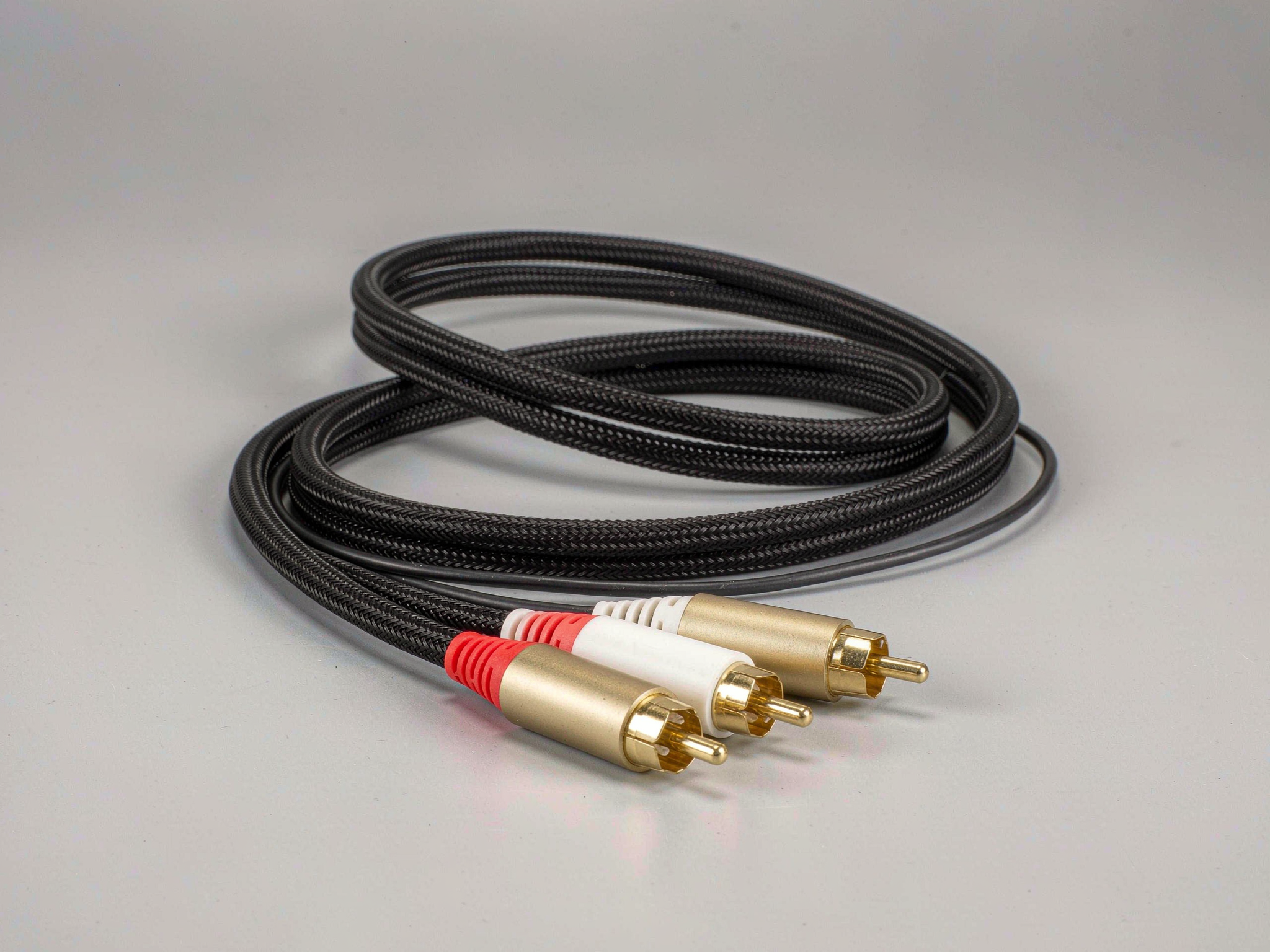
Quick answer: A plug exists to make one joint repeatable, so choose it by the failure you want to avoid. An expanding banana presses outward in a worn socket and stops the loose pin. Plating resists the oxide layer that builds on bare brass. A closed barrel or a boot keeps a stray strand away from the neighbouring terminal. Pick the plug that closes the gap your installation actually has.
Most speaker faults that reach a repair bench are joint faults, not cable faults. The cable measures fine, then one channel drops out when the cabinet is nudged, or a receiver trips protection after a single strand touches the terminal next door. A plug either removes that risk or adds a new one.

Three failures a plug is meant to prevent
Each style of plug is an answer to one specific way a joint goes wrong. Knowing which one you are solving keeps the purchase short.
A loose pin
Spring pressure fades with age. A plain pin in a worn socket touches on a narrow line, and the resistance climbs as the two surfaces fret against each other. The symptom is a channel cutting in and out when the cable is moved, and the cure is a plug that expands or locks rather than one that rests.
An oxidised contact
Bare copper and bare brass both grow an oxide film in humid air, and that film conducts poorly. Plating places a layer that resists the film between the two metals, so the joint holds its value across seasons. A dull or green contact is already adding resistance to the path.
A shorted strand
One stray strand bridging the two terminals is a partial short across the amplifier output. At low level nothing seems wrong; at high level the amplifier sees a falling load and may protect or fail. A closed barrel, a boot or a crimped ferrule keeps strands where they belong.
Plug styles compared
| Plug style | Failure it prevents | Contact method | Suits |
|---|
| Expanding banana | Loose pin in a worn socket | Sprung leaves pressing outward | Frequent unplugging |
| Screw clamp banana | Soldered joint cracking | Barrel screw on bare wire | Thick cable, no soldering iron |
| Pin plug | Frayed wire in a spring clip | Solid pin, single contact line | Small clips, light cable |
| Speakon | Accidental disconnection and shorts | Twist latch, recessed contacts | Portable and installed sound |
When bare wire is the better joint
Bare wire has fewer parts and therefore fewer places to fail, which is why it survives in fixed installations. It works when the terminal clamps a wide flat area, when the cable will not be moved again, and when the conductor is thin enough for the clamp to close fully. Add a plug when any of those three conditions is missing.
Fitting a plug without creating a new fault
A soldered joint needs enough heat to flow fast and then no movement while it cools, otherwise it looks bright and conducts badly. A crimped joint needs the die matched to the barrel, since an undersized crimp pulls off and an oversized one crushes strands. In both cases the strain relief must grip the jacket, not the conductors, because a plug that flexes at the wire end breaks strands behind the shell.
Two checks before you cut the cable
First, look into the socket on the amplifier: a recessed socket rejects a long plug body, and a shallow one rejects a short body. Second, measure the outside diameter of the jacket, because a plug whose rear opening is larger than the cable will not clamp it and will rely on the conductors for support.
Practical scenarios
- Wall plate to amplifier: fixed joints on both ends favour a screw clamp body, which can be retightened later without unsoldering anything.
- Party setup moved weekly: a latching plug is worth the extra bulk because the cable gets pulled by feet, not by hands.
- Old receiver with tight spacing: right angle bodies keep the cable from levering sideways on a crowded rear panel.
- Thin gauge surround run: a pin plug fits a spring clip that will not close on 16 AWG wire, and it removes the frayed end that starts the short.
FAQ
Do plugs add resistance to a cable?
A good joint adds a small amount, measured in thousandths of an ohm, and a corroded one adds far more. The plug is not the problem; the quality of the clamp and the cleanliness of the surfaces decide the value.
Can I reuse a plug from an old cable?
Only if the barrel is undamaged and the plating is intact. Cut the old cable cleanly, trim any crushed strands, and check that the new conductor fits the same barrel size before relying on it.
Are solderless plugs reliable?
Yes, when the screw clamps a folded bundle rather than a few strands, and when the body has a proper strain relief. They are easier to inspect than a soldered joint, which is an advantage in the field.
Next step
Count the plug bodies you need, then check the socket depth and the jacket diameter before ordering. The banana plug assemblies page shows ready made pairs, the pre-made speaker leads suit installs where nothing will be re-terminated, and the socket and body guide explains which shell fits a recessed post. Adding a spare pair costs little and saves a return trip.
See the matching cables and adapters