
Cat7 Patch Panel: Interface First
Quick answer / TL;DR: Short answer: a true Cat7 panel uses GG45 or TERA jacks throughout, with the shield bonded to the rack. If the installation will use RJ45 cords – which most do – specify a Cat6a panel and accept Class EA: it is certified, available and cheaper. Mixing a Cat7 panel with RJ45 cords produces a channel that tests below the panel's claim.
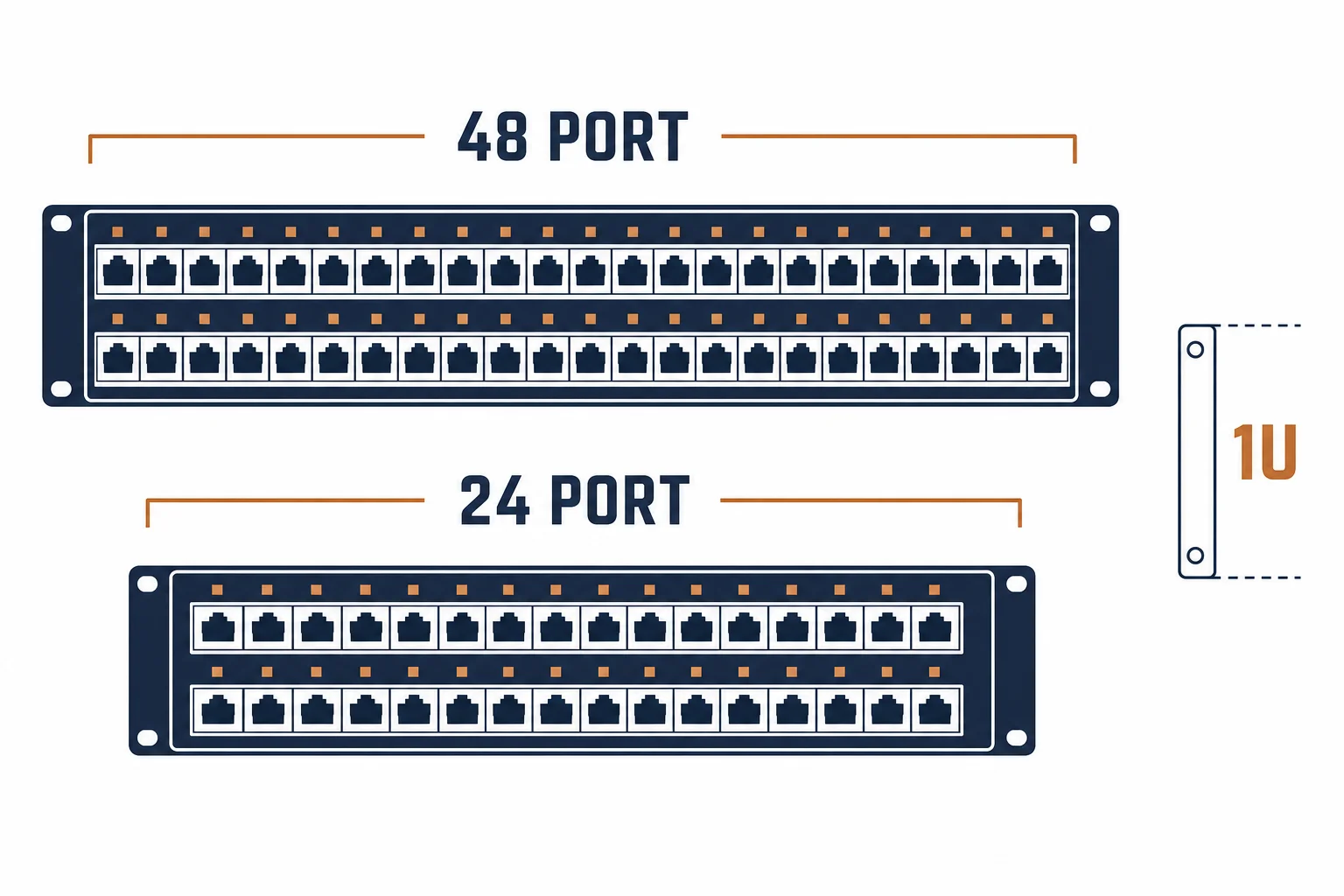
A Cat7 patch panel is defined by its connector interface, not by its metalwork: the standard specifies GG45 or TERA, and a panel fitted with RJ45 jacks is a Cat6a panel with a Cat7 label. Buying the panel is therefore a decision about the whole plant, not about one component.
This is the Cat7 panel guide: the interfaces, the bonding the class requires, and the projects where the panel choice should be Cat6a instead.
The Interfaces
| The interface | The class | The compatibility |
|---|---|---|
| GG45 | Cat7 | Accepts RJ45 in a reduced mode |
| TERA | Cat7 | Different mating face |
| RJ45 | Cat6a practical ceiling | Universal |
The interface choice is what separates a Class F system from a Cat6a one; the panel is simply where that choice becomes visible.
The Bonding Requirement
- Shield bonded from jack shell to panel
- Panel bonded to the rack
- Rack to building earth
- Continuity tested, not assumed
Cat7 is S/FTP, so the bonding chain is longer than for an unshielded system and has more places to break.
Standards and Verification
| The reference | The relevance |
|---|---|
| ISO/IEC 11801-1 | Class F |
| IEC 60603-7-7 | GG45 |
| TIA-568.2-D | Cat6a as the practical RJ45 class |
| Field test | Channel test at the installed class |
Per-SKU panel interfaces are not provided in the knowledge base. The class definitions are standard; confirm the connector type before ordering a full plant.
Practical Notes
Sourcing GG45 and TERA panels is slower than sourcing Cat6a, and spares are harder to find years later. That supply-chain reality belongs in the decision alongside the performance argument.
Real-World Applications
The Class F plant
A facility standardising on GG45: panels, jacks and cords from one source, bonded and tested – the only configuration where the panel's label matches the channel's result.
The RJ45 reality
A Cat7 panel ordered for a project that patched with RJ45 cords: every channel tested at Class EA. The panel was not at fault – the interface was never going to support more.
The supply gap
A GG45 panel specified with no spares: one jack damaged and eight weeks for a replacement. Cat6a panels substituted for the remaining floors – availability became the deciding argument.
Related reading: The cable this panel terminates — blogs/news/cat7-bulk-cable
Related reading: The Cat6a alternative that is certified — blogs/news/cat6a-patch-panel
Frequently Asked Questions
What makes a patch panel Cat7?
Its connector interface – GG45 or TERA – together with Class F-rated jacks.
Can I use RJ45 jacks on a Cat7 panel?
Then it is effectively a Cat6a channel; the class is not maintained.
Does Cat7 need bonding?
Yes – S/FTP requires the shield to reach earth through the panel and rack.
Cat7 or Cat6a panel?
Cat6a if the plant is RJ45 – it is certified, available and cheaper.
Sourcing cables for a project, a store, or a private-label line? Contact our B2B sales team for specifications, certification evidence, and volume terms – FOB and CIF options available. Request a quote or sample.