
Cat6 Patch Cable: Matching the Site
Quick answer / TL;DR: Short answer: buy Cat6 patch cables as stranded cords with moulded plugs, in the lengths the site needs (0.5-5 m for cabinets and desks). Confirm the category on the plug or packaging, use snagless boots in dense panels, and never substitute Cat5e cords on a Cat6 site – the channel drops to the lower category.
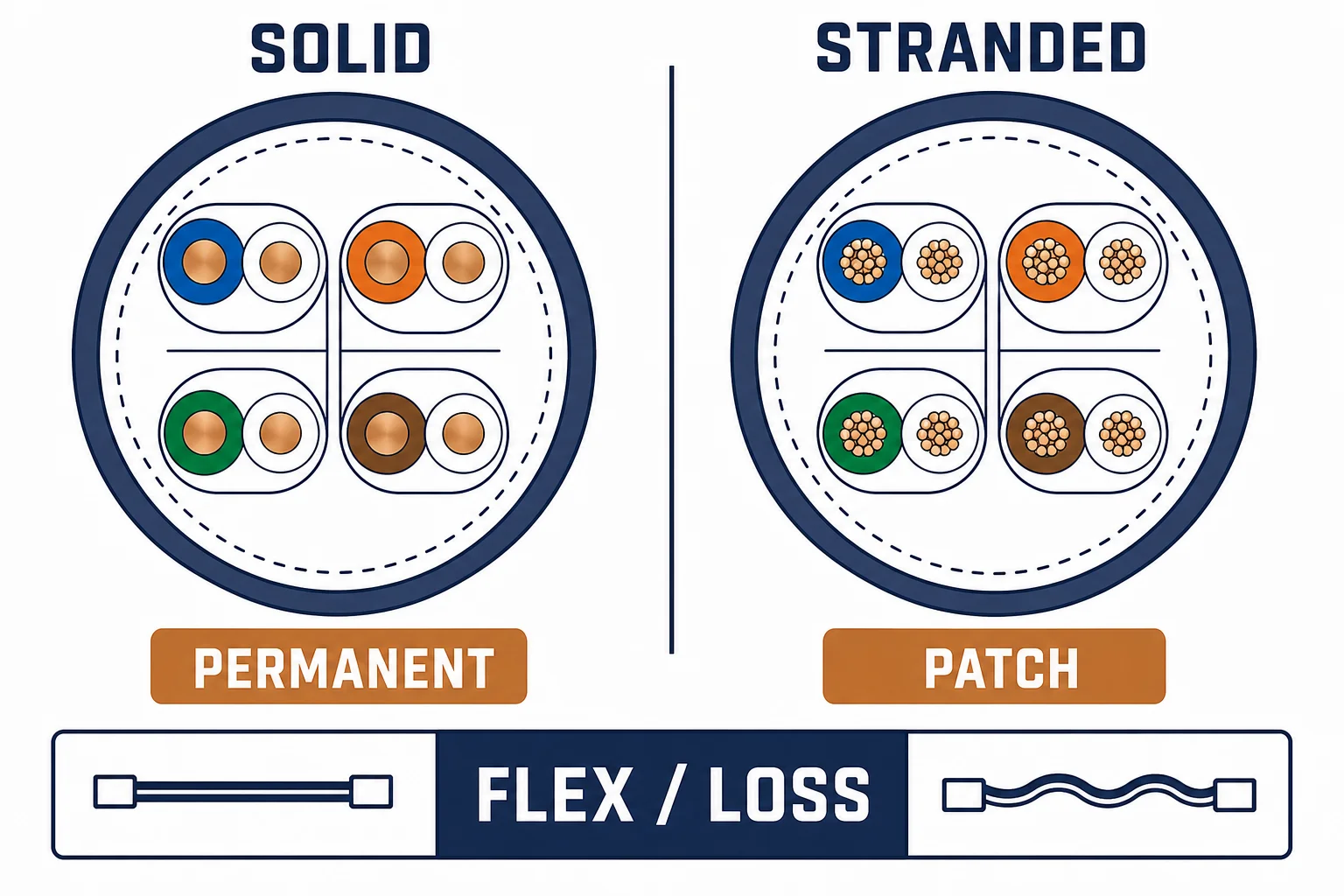
On a Cat6 site the patch cord is the last component and the easiest to downgrade: a Cat5e cord in a Cat6 channel caps the channel at Cat5e, and nobody notices until a 10G link refuses to negotiate. Matching cords to the cabling is the cheapest performance decision in the project.
This is the Cat6 cord guide: the construction, the boot and length choices, and the checks that keep a cord from becoming the weak link.
The Construction
| The element | The Cat6 cord | The note |
|---|---|---|
| Conductor | Stranded, 24-26 AWG | Flex life at the plug |
| Category | Cat6 rated plugs and cable | Preserves the channel |
| Boot | Moulded, snagless optional | Latch protection |
| Length | 0.5-5 m typical | Tidiness |
The cord is deliberately more flexible and slightly lossier than the permanent cable – a trade made for handling.
The Downgrade Problem
- A Cat5e cord in a Cat6 channel: the channel tests at Cat5e
- A Cat6 cord with Cat5e plugs: the same result
- Mixed cords across a cabinet: unpredictable test results
- The fix: one category, verified on delivery
The downgrade is invisible in normal use, which is why it survives until a high-rate link is added.
Boots and Lengths
| The position | The cord |
|---|---|
| Panel to switch | 0.5-1 m, snagless |
| Desk to outlet | 2-3 m, standard |
| Room run | 15-25 ft |
| Spare stock | Two lengths, one category |
Standards and Verification
| The reference | The relevance |
|---|---|
| TIA-568.2-D | Cord and channel requirements |
| ISO/IEC 11801-1 | Class E |
| Field test | Channel test with cords in place |
Per-SKU cord construction is not provided in the knowledge base. The category rule is standard; check the plug marking for the category.
Real-World Applications
The Cat6 fit-out
A new office with Cat6 to every desk: Cat6 cords ordered in the same purchase – channels testing at the specified category first time.
The leftover cords
A Cat6 site patched with boxes of Cat5e cords found in a store room: two 10G links failing to negotiate. Cords replaced – the downgrade found late.
The plug mismatch
Cat6 cable crimped with Cat5e plugs to use up stock: two links testing at Cat5e. The batch re-terminated with category-matched plugs.
Related reading: The conductor form inside the cord? Read solid versus stranded — blogs/news/solid-vs-stranded-cat6
Related reading: The patch-cable line in general? Read the ethernet patch cable guide — blogs/news/ethernet-patch-cable-line
Frequently Asked Questions
Do patch cables need to match the cable category?
Yes – a lower-category cord caps the channel at its own rating regardless of the permanent cable.
What is a Cat6 patch cable made of?
Stranded conductors with Cat6-rated plugs and a flexible jacket, designed for handling rather than long runs.
Snagless or standard boots?
Snagless in cabinets and dense panels; standard at desks where cords are released often.
Can I use Cat6 cords on a Cat6a site?
The channel falls to Cat6. If 10G at full distance is required, use Cat6a cords.
Sourcing cables for a project, a store, or a private-label line? Contact our B2B sales team for specifications, certification evidence, and volume terms – FOB and CIF options available. Request a quote or sample.