
8K HDMI Cable: 48 Gbps and Its Conditions
Quick answer / TL;DR: Short answer: 8K at 60 Hz requires Ultra High Speed (48 Gbps) cable plus an 8K-capable source and display. Without all three, the cable changes nothing. Buy it now if you are cabling a wall for a future display or running 4K at very high refresh; otherwise a Premium High Speed cable is sufficient and cheaper.
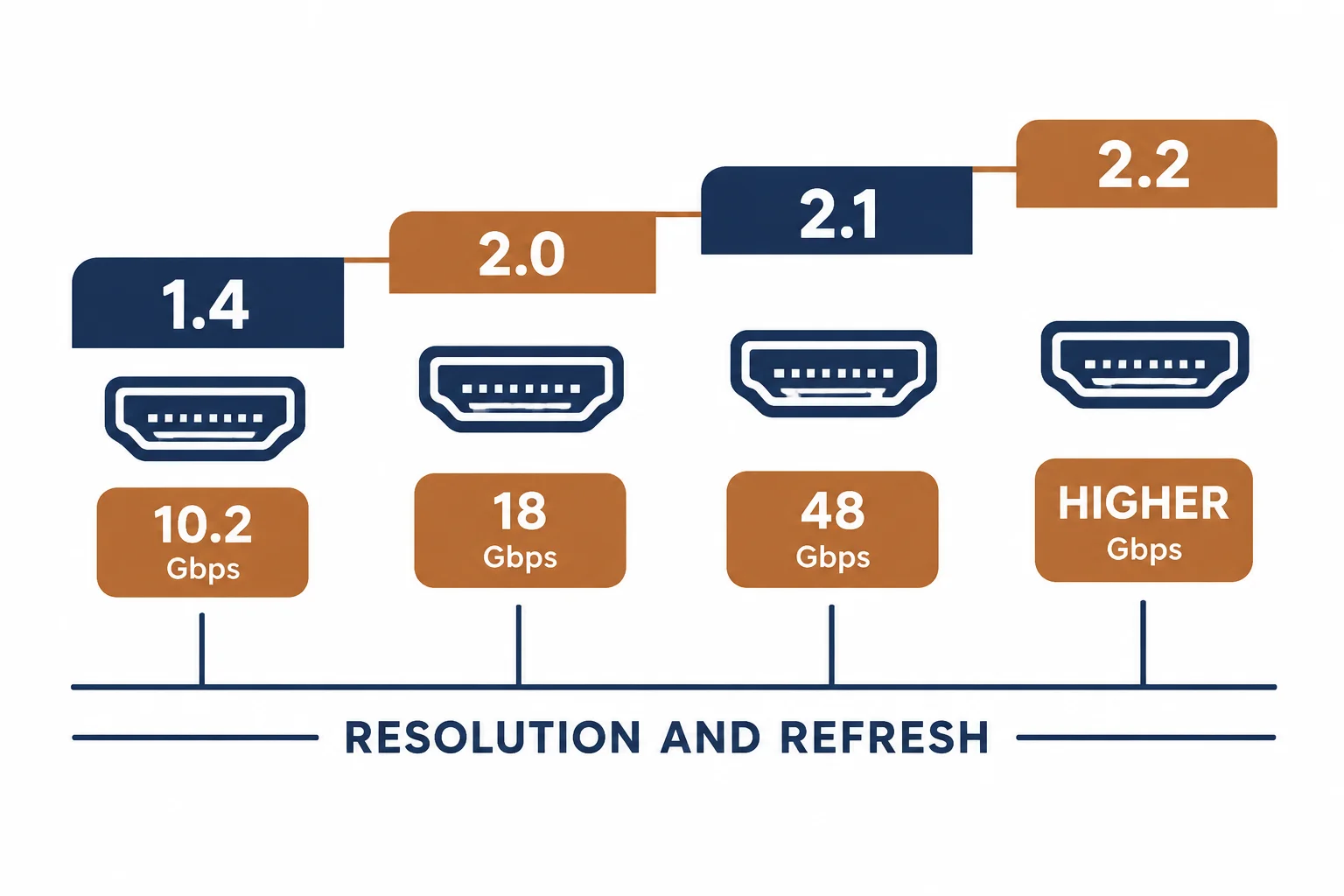
8K at 60 Hz needs about 48 Gbps, which is the top tier of the current HDMI specification and the reason Ultra High Speed cable exists. Buying that cable today is cheap insurance for a future display; buying it expecting a better picture today is a misunderstanding.
This is the 8K cable guide: what the bandwidth is for, the conditions that must all be met, and the cases where the purchase is sensible now.
What the Bandwidth Is For
| The mode | The bandwidth | The cable |
|---|---|---|
| 4K 60 Hz HDR | 18 Gbps | Premium High Speed |
| 4K 120 Hz | Over 30 Gbps | Ultra High Speed |
| 8K 60 Hz | 48 Gbps | Ultra High Speed |
The tier exists for the top of that table, and nothing below it needs the cable.
The Three Conditions
- A source that outputs 8K
- A display that accepts it
- A cable certified for 48 Gbps
- All three, or the mode is unavailable
A single missing element makes the purchase inert, which is why the honest advice is usually to wait.
When Buying Now Makes Sense
| The situation | The verdict |
|---|---|
| Cable being buried in a wall | Buy the highest tier |
| 4K at 120 Hz | Ultra High Speed needed |
| 8K display already owned | Buy it |
| 1080p or 4K 60 Hz today | Premium is enough |
The wall case is the one that justifies the premium: replacing cable inside a finished wall costs far more than the cable.
Standards and Verification
| The reference | The relevance |
|---|---|
| HDMI 2.1 | 48 Gbps tier |
| HDMI certification | Ultra High Speed programme |
| HDCP 2.3 | Protection for 8K content |
| Field test | Display reporting the mode |
Per-SKU certification is not provided in the knowledge base. The bandwidth tier is standard; check for the certification label rather than a version claim.
Practical Notes
At 48 Gbps, cable length matters more than at any lower tier: passive copper runs shorten sharply, and beyond a few metres the answer is fiber. Plan the route before choosing the construction.
Real-World Applications
The wall pre-wire
A renovation with the television wall open: Ultra High Speed cable installed in conduit – the future display served without opening the wall again.
The premature purchase
An 8K cable on a 4K 60 Hz system: identical picture to the Premium cable it replaced. The premium bought headroom that nothing in the chain could use.
The length limit
An 8K link at 6 m on passive cable: intermittent dropouts. A fiber HDMI cable used – the highest bandwidth tier is the least tolerant of length.
Related reading: The bandwidth ladder — blogs/news/hdmi-2-2-cable
Related reading: The active cable option — blogs/news/active-hdmi-cable
Frequently Asked Questions
Do I need an 8K cable for 4K?
No – Premium High Speed covers 4K at 60 Hz with HDR.
What bandwidth does 8K need?
About 48 Gbps at 60 Hz.
Does an 8K cable improve picture quality?
No – it removes a limit; without an 8K source and display there is nothing to improve.
How long can an 8K cable be?
Short runs on passive copper; longer needs fiber.
Sourcing cables for a project, a store, or a private-label line? Contact our B2B sales team for specifications, certification evidence, and volume terms – FOB and CIF options available. Request a quote or sample.